

Outer Continental Shelf Lands Act
Over $1 Billion Recovered for Maritime Accident Victims. We are proud to have a reputation for aggressively fighting for the rights of injured workers.
OCSLA Claims for Offshore Platform Workers — Lambert Zainey Smith & Soso
If you were injured working on a fixed oil platform, jack-up rig, or other structure attached to the seabed in the Gulf, the Outer Continental Shelf Lands Act — known as OCSLA — most likely governs your injury claim. Understanding what OCSLA means for you is the first and most important step in pursuing full compensation.
OCSLA does two things that matter directly to injured workers. First, it guarantees you LHWCA workers’ compensation benefits — covering medical expenses and a portion of lost wages — from your employer, regardless of fault. Second, it allows you to bring separate negligence claims against other responsible parties — the platform operator, contractors, and equipment manufacturers — using Louisiana law or federal maritime law. These two claims can be pursued simultaneously, and pursuing both is almost always the right approach.
Lambert Zainey’s New Orleans maritime lawyers have spent nearly 50 years navigating OCSLA claims for workers injured on Gulf Coast platforms and structures. This page explains how OCSLA works and what it means for your specific situation.
On This Page
Key Takeaways
What Is the Outer Continental Shelf Lands Act (OCSLA)?
Passed on August 7, 1953, the Outer Continental Shelf Lands Act (43 U.S.C. § 1331 et seq.) establishes federal jurisdiction and control over the submerged lands of the Outer Continental Shelf beyond state boundaries. Its primary purposes include managing the exploration and development of natural resources — oil, gas, and minerals — and ensuring safety standards on structures located there.
For personal injury purposes, OCSLA’s most significant function is to fill a potential legal gap by determining which laws govern incidents on these federally controlled areas. It acts as a “choice of law” statute — directing whether state law or federal maritime law applies to your specific claim.
A note on coverage beyond the platform: In 2012, the U.S. Supreme Court ruled unanimously in Pacific Operators Offshore, LLC v. Valladolid that OCSLA coverage extends beyond the platform itself. OCSLA applies to workers so long as they can establish a substantial nexus between their injury and their employer’s OCS extractive operations — meaning a worker injured at an onshore facility while performing duties that supported offshore operations may still qualify for OCSLA protections. If you were injured away from the platform but your work supported offshore operations, speak with an attorney before assuming OCSLA does not apply.
When and Where Does OCSLA Apply?
Defining the Outer Continental Shelf
The OCS generally refers to submerged federal lands lying seaward of state coastal waters. State waters typically extend 3 nautical miles from the coast — though Texas and the Gulf coast of Florida extend to 9 nautical miles. OCSLA applies to incidents occurring on structures located in these federal waters beyond state boundaries.
Structures Covered by OCSLA
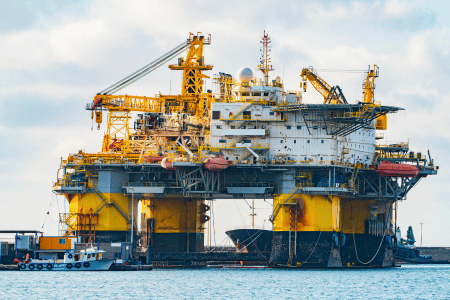
OCSLA specifically applies to injuries occurring on artificial islands, installations, and other devices permanently or temporarily attached to the seabed erected for the purpose of exploring, developing, removing, or transporting resources from the OCS. This primarily means:
OCSLA generally does not apply to floating vessels — supply boats, crew boats, drillships while floating, or semi-submersibles. Those are typically governed by general maritime law or the Jones Act.
Connection to OCS Operations
The injury must result from or occur in connection with operations conducted on the OCS for the purpose of exploring for, developing, removing, or transporting natural resources. This connection can exist even if the injury did not occur on the OCS structure itself — what matters is whether there is a substantial causal link between the injury and OCS operations.
Which Law Applies Under OCSLA?
This is where OCSLA becomes complex. It does not create its own body of tort law. Instead it directs which existing laws apply. The answer significantly affects what you can recover and who you can sue.
Default Rule — Law of the Adjacent State
OCSLA directs courts to apply the civil and criminal laws of the adjacent state — the closest state to the structure — as surrogate federal law, to the extent they are applicable and not inconsistent with federal law.
What this means in practice: For most platform injuries in the central Gulf, Louisiana tort law governs the negligence claim against a third party — including negligence standards, liability rules, and recoverable damages.
⚠️ Louisiana’s deadline for tort claims: For injuries on or after July 1, 2024, Louisiana’s prescriptive period for tort claims is two years. Injuries before that date remain subject to the one-year period. Either way, this is shorter than the three-year deadline that applies to Jones Act and general maritime law claims.
2026 Louisiana comparative fault update: For incidents occurring on or after January 1, 2026, Louisiana’s amended comparative fault statute bars recovery entirely if you are found 51% or more at fault. This is a significant change from prior law, which allowed partial recovery regardless of fault percentage. If you were injured in 2026 on a platform where Louisiana law governs, the circumstances of your accident require careful legal evaluation before any statements are made or documents signed.
Exception — Federal Maritime Law
State law does not apply if federal maritime law is applicable. Determining this requires analysis of whether the incident has a sufficient maritime nexus — a connection to traditional maritime activity — even though it occurred on a fixed structure.
Examples where maritime law may apply:
When maritime law applies, the statute of limitations extends to three years — making the jurisdictional determination one of the most consequential legal questions in your case.
LHWCA Coverage for OCS Workers
OCSLA explicitly extends the Longshore and Harbor Workers’ Compensation Act (LHWCA) to cover disability or death resulting from any injury occurring as the result of OCS operations. The U.S. Department of Labor administers LHWCA benefits for OCS workers.
What LHWCA provides:
Critical: LHWCA benefits are available regardless of fault — you do not need to prove anyone was negligent to receive them. And receiving LHWCA benefits from your employer does not prevent you from pursuing a separate negligence claim against a third party.
OCSLA vs. Jones Act vs. LHWCA — Key Differences
This table highlights the key distinctions relevant to offshore injuries:
|
Question |
OCSLA (Governing Tort Law) |
Jones Act |
LHWCA (Directly or via OCSLA) |
|
Covered Worker |
Workers on fixed OCS structures |
“Seamen” (crew on vessels) |
Various maritime workers (Longshore, Shipyard, OCS Platform Workers via OCSLA) |
|
Location |
Fixed structures on OCS (beyond state waters) |
Vessels in navigation (any location) |
Navigable waters, adjacent areas, OCS platforms via OCSLA |
|
Basis of Tort Claim |
Negligence/Fault under Adjacent State Law (usually) or Maritime Law (exceptionally) |
Employer Negligence |
Generally, no tort claim against the employer; provides comp benefits |
|
Compensation Benefits |
No direct benefits; governs tort law |
Maintenance & Cure |
Medical & Lost Wage Benefits (no-fault) |
|
Can Sue Employer? |
Generally, no (due to LHWCA immunity), unless employer = platform owner acting negligently in non-employer capacity (complex). |
Yes (for Negligence) |
Generally, no (except specific exceptions) |
|
Governing Law |
Dictates State or Maritime Law |
Federal Maritime Law |
Federal Law (LHWCA statute) |
Common Types of Accidents Covered Under OCSLA
Workers on OCS platforms face hazards that do not exist in land-based workplaces. Claims governed by OCSLA frequently arise from:
Over $1 Billion Recovered for Maritime Accident Victims
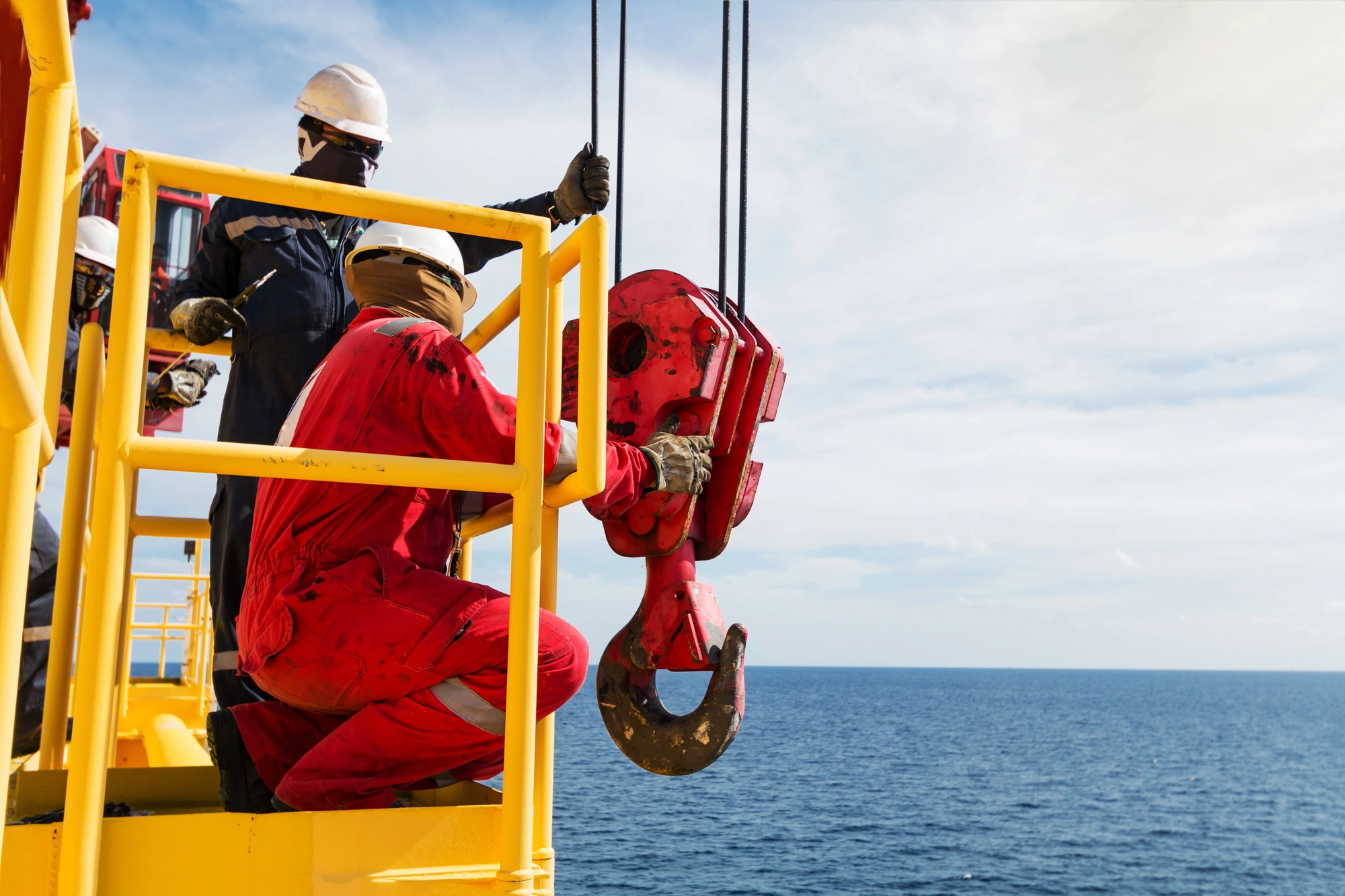
A derrickman on a fixed platform tripped on a cable and injured his back, in a case complicated by the fact the incident was initially unreported. Lambert Zainey demonstrated the injury was work-related and negotiated a successful resolution.
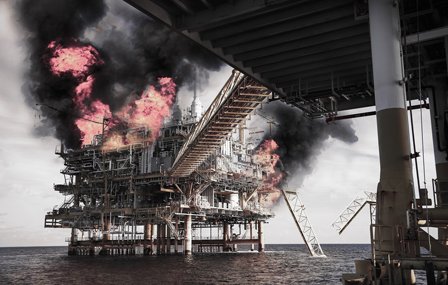
Arco cryogenic platform explosion caused by improper cold cut of Southern Natural Gas pipeline. The case centered on showing that the cold-cut procedure violated pipeline safety standards, triggering the explosion that killed and injured platform workers. Settlement for the injured and deceased in approximately twelve months.
Why Legal Expertise Is Critical for OCSLA Claims
The interplay between OCSLA, Louisiana law, federal maritime law, and the LHWCA is among the most complex areas of injury law in the United States. Getting the framework wrong — or missing a deadline — can eliminate your right to compensation entirely. An experienced OCSLA attorney will:
Download our free guide on the 5 Costly Mistakes to Avoid After a Maritime Accident →
What to Do After an Injury on an Offshore Platform
The steps you take in the hours and days after a platform injury directly affect your ability to recover full compensation.
Step 1: Get medical attention immediately.
Accept emergency treatment and follow up with a physician as soon as possible. Tell every treating physician exactly how the accident happened. A continuous medical record from the date of injury is critical evidence in your OCSLA claim.
Step 2: Report the injury in writing — within 30 days.
The LHWCA notice requirement is strict and unforgiving. Notify your employer of the injury in writing as soon as possible. The 30-day clock begins running on the date of injury — not the date you decide to pursue a claim. Missing it can permanently eliminate your right to LHWCA benefits.
Step 3: Do not sign anything without legal advice.
Employers and their insurers move quickly after platform accidents. Do not sign any medical authorization, incident report, settlement document, or release before speaking with an experienced OCSLA attorney.
Step 4: Document the accident.
If you can safely do so, photograph the area where the accident occurred, the equipment involved, and your injuries. Note the names and contact information of witnesses. Write down what happened while your memory is fresh.
Step 5: Contact Lambert Zainey.
OCSLA claims involve overlapping legal frameworks and strict deadlines. The sooner you have experienced representation, the better protected your claim will be. Contact us for a free, confidential consultation — no fees unless we recover for you.
Why Offshore Platform Workers Trust Lambert Zainey













Frequently Asked Questions About OCSLA Claims
Injuries on offshore oil rigs or platforms may be covered under OCSLA. This section answers key questions to help you understand your rights and what support may be available to you.
Do I Have A Case? Quiz
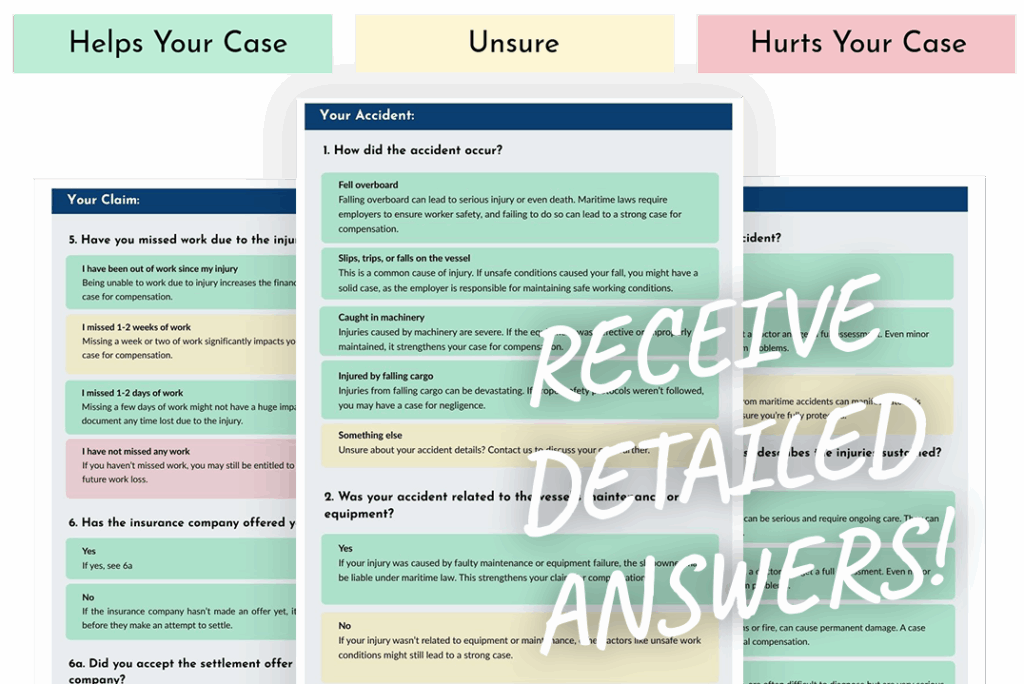
Do you want to know if the details of your Maritime Accident HELP or HURT your case?
Take our short quiz to find out.
What Our Clients’ Say About Us
NATIONALLY RECOGNIZED ATTORNEYS



CONTACT US
Our experienced attorneys are here to guide you through every step of the process, from initial consultation to settlement or trial.
Free Case Review
Fill out the form below to contact Lambert Zainey and schedule a free, confidential consultation and discuss your case with an experienced attorney.