
- The Gulf of Mexico is forecast to contribute about 13% of U.S. crude oil production in 2025 and 2026 — making it one of the most economically critical and hurricane-exposed bodies of water in the world.
- Federal regulations require offshore operators to develop hurricane preparedness plans — but BSEE does not have authority to mandate evacuations. Operators make the call. When they get it wrong, workers pay the price.
- Injuries during hurricane evacuations, emergency operations, and post-storm platform returns are all covered under maritime law. A storm does not eliminate a company’s legal responsibility for worker safety.
- The three most common company failures during hurricane season: delaying evacuation to protect production, rushing workers back to damaged platforms too soon, and failing to provide adequate safety equipment during emergency operations.
- Lambert Zainey has handled hurricane-related maritime cases across the Gulf Coast for nearly 50 years. The pattern those cases reveal is consistent — the failures that injure workers are almost always preventable and almost always driven by production pressure over safety.
Every hurricane season, thousands of offshore workers in the Gulf of Mexico face a question with no simple answer: when is it safe to leave, and when is it safe to go back?
When companies get that answer wrong — evacuating too late, rushing workers back too soon, or cutting corners during emergency operations — people get hurt.
The Gulf of Mexico was forecast to contribute about 13% of U.S. crude oil production in 2025 and 2026, with production averaging approximately 1.80 to 1.81 million barrels per day. When a major storm threatens that infrastructure, the financial pressure on operators to protect production can override the judgment calls that protect workers.
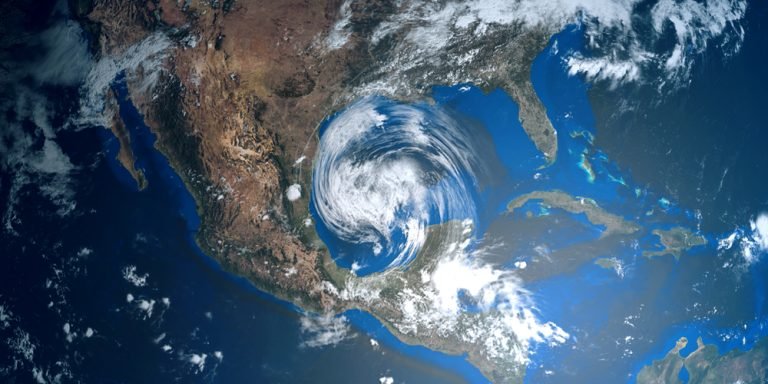
Work boats, supply boats, lift boats, drill ships, jack-up rigs, survey vessels, dive ships and anything else in the projected path of the hurricane has to stop what it’s doing to escape the coming storm. Yet workers are injured in hurricane-related offshore accidents every season.
Lambert Zainey has spent nearly 50 years handling hurricane-related maritime cases across the Gulf Coast. What those cases consistently reveal is that the failures that injure workers are almost always preventable — and almost always driven by production pressure over worker safety.
How Hurricane Evacuations Work — and Who Is Actually Responsible
Understanding who controls the evacuation decision is the most important thing an offshore worker can know about hurricane season.
What BSEE requires:
BSEE (Bureau of Safety and Environmental Enforcement) sets forth regulations and guidance for the design and operation of oil and gas facilities to withstand the extreme conditions of severe weather and hurricanes and to protect the men and women who work offshore. Operators must develop detailed preparedness plans covering structural assessments, evacuation procedures, equipment securing, and comprehensive emergency response strategies.
What BSEE cannot do:
⚠️ BSEE does not have authority to mandate evacuations. Operators are responsible for evacuation decisions in coordination with agencies such as the U.S. Coast Guard, which manages evacuations and emergency responses. According to federal regulations, it is the responsibility of the offshore operator to develop and implement emergency response plans, which include provisions for evacuating personnel if necessary.
The bottom line: The decision of when to evacuate — and when it is safe to return — rests with the company. Not a federal agency. Not the workers. The company.
When that decision is made negligently, the law provides a remedy.
What the Rules Require — and Where Companies Fail
Standard hurricane preparations for offshore operators include:
- Evacuating non-essential personnel as the storm approaches
- Issuing regular weather warnings and updates to workers on the platform
- Suspending all drilling operations
- Activating shut-in procedures to close sub-surface safety valves
- Submitting preparedness documentation and inspection reports to BSEE before hurricane season
Safety and Environmental Management Systems (SEMS) are required systems that operators use to manage safety and environmental risks, identify potential hazards, outline procedures for preventing incidents, and provide clear guidelines for managing operations safely during hurricanes.
In practice, the failures Lambert Zainey has seen across decades of hurricane litigation fall into three categories:
Failure 1: Delayed evacuation to protect production
The financial cost of shutting down a platform is significant. When companies weigh that cost against an approaching storm, the decision is sometimes made to wait — to keep workers on the platform longer than is safe in hopes the storm tracks away.
This is not hypothetical. In one documented incident during Hurricane Ida, BSEE identified that a drilling unit had delayed evacuation procedures during the encroaching storm, made poor operational decisions, and experienced equipment breakdowns — resulting in the loss of marine riser joints and pollution of the Gulf. Workers who are kept on platforms past the point of safe evacuation cannot escape the consequences of that decision.
Failure 2: Rushing workers back to damaged platforms
After a hurricane passes, companies face intense pressure to restore production. Workers are sometimes sent back before adequate post-storm inspections have confirmed the structure is safe.
BSEE enforces regulations that require regular inspections, maintenance, and assessments of offshore facilities, and facilities must meet stringent structural integrity standards designed to withstand hurricane-force conditions. When companies skip or accelerate post-storm inspections to get workers back faster, they are putting profits ahead of the structural safety assessments those regulations require.
Failure 3: Inadequate safety equipment during emergency operations
Hurricane evacuations are chaotic. Workers move quickly, weather deteriorates fast, and the margin for error shrinks. When companies fail to provide adequate personal protective equipment, maintain functioning communication systems, or ensure life safety equipment is accessible and operational, workers have no margin when something goes wrong.
Your Legal Rights if You Are Injured During a Hurricane
A storm does not eliminate your legal rights as an offshore worker. The same laws that protect you during normal operations apply during evacuations and post-storm returns.
If you qualify as a seaman — the Jones Act applies
You can file a negligence claim directly against your employer if their failure to evacuate safely, their decision to return you to a dangerous platform too soon, or their inadequate emergency procedures contributed to your injury. Under the Jones Act, employers must provide a reasonably safe place to work — including during hurricane operations. You are also entitled to maintenance and cure benefits from the date of injury regardless of fault.
Deadline: 3 years from the date of injury.
If you work on a fixed offshore platform — OCSLA applies
Platform workers are typically covered by the Outer Continental Shelf Lands Act, which extends LHWCA workers’ compensation protections and allows third-party negligence claims against operators, contractors, and equipment manufacturers.
⚠️ Critical deadline: LHWCA/OCSLA claimants must notify their employer within 30 days of injury and file a formal claim within one year. Missing the 30-day notice requirement can eliminate your right to benefits entirely.
If you work on a vessel — unseaworthiness applies
Vessel owners have a duty to provide a seaworthy vessel. A vessel sent into deteriorating hurricane conditions without adequate safety equipment, or returned to operations before storm damage has been properly assessed, may give rise to an unseaworthiness claim independent of any negligence claim.
The storm does not excuse the company
Hurricanes in the Gulf of Mexico are not surprise events. They develop over days with extensive warning. A company that fails to plan adequately, act on those plans in time, or protect its workers during emergency operations cannot use the storm itself as a defense. Weather is foreseeable. The obligation to protect workers does not pause for hurricane season.
What Lambert Zainey Has Learned From Decades of Hurricane Litigation
Over nearly 50 years of representing offshore workers and their families across the Gulf Coast, Lambert Zainey has handled cases arising from hurricane-related injuries in a wide range of scenarios — delayed evacuations, post-storm platform returns, vessel accidents during emergency repositioning, and injuries that occurred during operations shutting down under an approaching storm.
Three patterns emerge consistently:
Production pressure drives most of the worst decisions. Companies that delay evacuation, rush workers back, or skip post-storm inspections are almost always doing so to minimize downtime. The financial calculation that leads to those decisions does not account for what workers pay when those decisions go wrong.
The regulatory framework exists — but companies implement it. BSEE sets the standards. The U.S. Coast Guard coordinates emergency response. But the decision of when to evacuate and when it is safe to return rests with the operator. When that decision is made negligently, the law holds the operator responsible.
Workers are often told the storm was the cause. It was not. The cause was the decision made before, during, or after the storm that put a worker in harm’s way. Those decisions belong to the company. So does the liability.
What to Do if You Were Injured During a Hurricane-Related Offshore Operation
Step 1: Get medical attention immediately
Document everything from day one — diagnosis, treatment plan, every follow-up. A continuous medical record is critical evidence. Do not wait to see how serious your injuries feel.
Step 2: Report the injury in writing
Notify your employer in writing as soon as possible. For LHWCA/OCSLA workers, the 30-day notice requirement is strict and unforgiving. Do not wait.
Step 3: Do not sign anything
Employers and insurers move quickly after offshore accidents. Do not sign any medical authorization, incident report, or settlement document before speaking with an attorney.
Step 4: Document the conditions
Note the evacuation timeline, the instructions you were given, the weather conditions, and when decisions were made. Write it down while your memory is fresh. Photographs if you can safely take them.
Step 5: Contact a maritime attorney immediately
The deadlines for hurricane-related offshore injury claims vary by legal framework — and some are very short. Do not wait to get legal advice.
Frequently Asked Questions
Injured During a Gulf Coast Hurricane Operation? Here Is What to Do Next.
Hurricane-related offshore injuries are among the most complex maritime cases — they involve overlapping questions about evacuation timing, operator decisions, regulatory compliance, and multiple legal frameworks simultaneously. The companies involved have legal teams working from the moment an injury occurs.
What Lambert Zainey brings to your case:
- Nearly 50 years of hurricane-related maritime litigation across the Gulf Coast
- Deep knowledge of BSEE regulations and how operator failures during hurricane season create legal liability
- Experience across every legal framework — Jones Act seamen, OCSLA platform workers, vessel crews, and families of workers who did not survive
- Over $1 billion recovered for injured workers and their families
The company’s lawyers are already working. You deserve the same.
Contact Lambert Zainey today for a free, confidential consultation — no fees unless we recover for you.
Get Our FREE Guide to Protect Your Claim
What you do after an accident is critical. Insurance companies will try to get you to make mistakes that can hurt your claim. Our free guide can help you avoid these traps.
Download our complimentary guide: “5 Costly Mistakes to Avoid After Any Maritime Accident” to arm yourself with the knowledge you need to protect your rights.