

Helicopter Accidents
Over $1 Billion Recovered for Maritime Accident Victims. We are proud to have a reputation for aggressively fighting for the rights of injured workers.
New Orleans Offshore Helicopter Accident Lawyers – Lambert Zainey
Helicopters are the primary means of transporting crews and equipment to offshore platforms, rigs, and vessels throughout the Gulf of Mexico. While essential to offshore operations, helicopter transport carries serious risks — engine failure, pilot error, adverse weather, and inadequate maintenance can all contribute to accidents that result in catastrophic injuries or death.
When an offshore helicopter crash occurs, determining liability involves a complex intersection of federal aviation regulations, maritime law, and in some cases state law. The offshore injury lawyers at Lambert Zainey have the experience in both aviation and maritime law necessary to investigate these accidents thoroughly, identify every responsible party, and fight for the maximum compensation available to injured workers and their families.
On This Page
Which Laws Apply When a Helicopter Crashes Offshore?
Figuring out which law governs your claim after an offshore helicopter crash is one of the most important — and most complicated — steps in the process. The answer depends on:
Different laws can apply to different defendants in the same crash, and the law that applies directly affects what compensation you can recover.
Unsure which law applies to you? Take our 60-Second Maritime Case Quiz to find out.
General Maritime Law
General maritime law applies broadly to accidents that occur on or over navigable waters. It imposes a duty of reasonable care on helicopter operators and manufacturers and establishes the basic legal framework for negligence claims in offshore aviation accidents.
For injured workers, this means the helicopter company, its maintenance contractors, and parts manufacturers can all be held liable if their negligence contributed to the crash. General maritime law allows recovery for medical expenses, lost wages, future earning capacity, pain and suffering, and mental anguish.
Death on the High Seas Act (DOHSA)
DOHSA applies when someone dies in an accident that occurs more than 12 nautical miles from the U.S. shoreline. Under DOHSA, the family of a deceased offshore worker can bring a wrongful death claim, but the law strictly limits recovery to financial support.
Because DOHSA significantly limits what families can recover compared to state law, determining whether the crash occurred within or beyond that 12-nautical-mile boundary is a critical factual question we investigate in every offshore wrongful death case.
State Law Through OCSLA
The Outer Continental Shelf Lands Act applies to accidents that occur on fixed platforms — drilling rigs, production platforms, and similar structures attached to the seafloor.
When a helicopter crash is caused at least in part by unsafe conditions on a fixed platform (like a cluttered helideck, poor lighting, or hazardous wind conditions created by platform structures) OCSLA may apply the law of the adjacent state (typically Louisiana) to claims against the platform operator.
State law claims often allow broader recovery than DOHSA, including compensation for loss of consortium and other non-economic damages. Identifying whether OCSLA applies requires a close analysis of where the crash originated and what role the platform played.
The Jones Act
The Jones Act applies to seamen — workers whose jobs contribute to the mission of a vessel and who spend a significant portion of their time working on a vessel in navigation. In most offshore helicopter accidents, the injured passengers are platform workers or contractors rather than seamen, which means the Jones Act typically does not apply directly to their claims.
However, if the injured person does qualify as a seaman — for example, a crew boat worker being transported by helicopter — the Jones Act may allow a negligence claim against their employer with a lower standard of proof than general maritime law. Whether you qualify as a seaman is a complex legal determination our attorneys can make for you based on the specific facts of your employment.
LHWCA (Longshore and Harbor Workers’ Compensation Act)
Platform workers who do not qualify as seamen may be entitled to workers’ compensation benefits under the LHWCA, which is a federal system that covers longshore workers, harbor workers, and certain offshore workers. LHWCA benefits cover medical expenses and a portion of lost wages regardless of fault.
However, accepting LHWCA benefits does not prevent you from pursuing separate negligence claims against the helicopter operator, manufacturer, or platform owner if their negligence caused the crash. An experienced maritime attorney can help you pursue both simultaneously.
Aviation Law and FAA Regulations
Federal Aviation Administration (FAA) regulations govern how helicopters are operated, maintained, and certified, and how pilots are trained and licensed. These regulations are central to establishing negligence in most offshore helicopter accident cases.
When a helicopter operator, maintenance company, or pilot violates FAA rules — such as flying an aircraft with known mechanical issues, failing to complete required inspections, or operating beyond a pilot’s certification limits — those violations are powerful evidence of negligence. Aviation law works alongside maritime and state law claims as the standard against which the company’s conduct is measured.
Don’t let the insurance companies use confusing maritime laws against you. Let Lambert Zainey handle the legal complexity while you focus on your family.
Over $1 Billion Recovered for Maritime Accident Victims
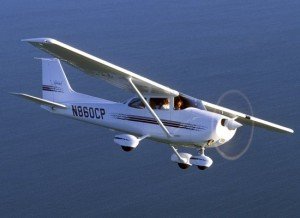
A passenger was killed in a personal airplane crash as a result of the pilot’s negligence. Lambert Zainey successfully resolved the case within one year without having to file suit against the pilot’s family.
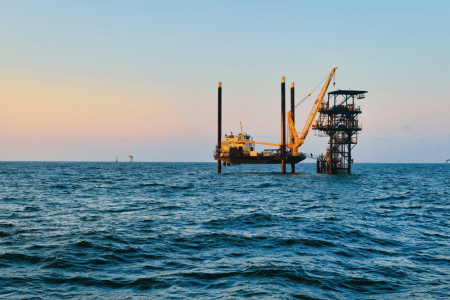
The liftboat Seacor Power capsized in the Gulf of Mexico during a storm on April 13, 2021, killing 13 of the 19 maritime workers on board. Hugh “Skip” Lambert was appointed co-lead liaison counsel and helped recover millions of dollars in damages for survivors and the families of the deceased.
Common Reasons Why Offshore Helicopters Crash
After investigating, crashes often happen because of one or more of these:
Pilot Mistakes
Pilot error is the leading cause of offshore helicopter accidents and often involves a chain of decisions rather than a single mistake. A pilot who continues into deteriorating weather despite forecasts, skips preflight checks under pressure, or becomes spatially disoriented over open water can quickly lose control.
Fatigue is a particular concern in offshore operations, where pilots fly multiple legs in a single day with limited rest. When pilot error is a factor, liability typically extends beyond the individual pilot to the company that employed them. Operators have a legal duty to ensure adequate training, enforce rest requirements, and refuse to pressure pilots into unsafe flights.
Read our deep-dive legal analysis: When a Helicopter Crash Is Blamed on Pilot Error — Who Is Really Responsible?
Mechanical Problems / Bad Maintenance
Helicopters require far more frequent and complex maintenance than fixed-wing aircraft. When a maintenance company cuts corners, uses substandard parts, or fails to catch developing problems, the consequences in flight are catastrophic.
Mechanical failure cases often involve multiple defendants, including:
Bad Weather
Weather is a constant hazard in Gulf of Mexico operations. However, bad weather does not automatically mean no one is responsible for a crash.
Operators and pilots have a legal duty to check forecasts and refuse to fly when conditions exceed safe operating limits. When a company pressures a pilot to fly despite unsafe weather to meet a production schedule, liability can be established even if the weather itself was the immediate cause of the crash.
Problems on the Platform or Landing Zone
The platform operator bears significant responsibility for maintaining a safe environment. A helideck that is cluttered, poorly lit, or contaminated with oil creates severe landing hazards. Furthermore, gas flares and physical structures on the platform can create unpredictable, dangerous wind patterns.
When platform conditions contribute to a crash, the platform operator—typically an oil and gas company—can be held liable under the Outer Continental Shelf Lands Act (OCSLA). Violations of federal safety standards set by the Bureau of Safety and Environmental Enforcement (BSEE) serve as powerful evidence in a platform liability claim.
Communication Errors
Communication failures can be decisive when they occur. Incorrect altitude data, missed weather updates, or failures to relay hazard warnings from the platform to the flight crew can place a helicopter in a deadly situation.
In offshore operations, communication responsibilities are distributed across air traffic control, the helicopter operator’s dispatch, and personnel on the platform. A breakdown at any point in that chain can contribute to a fatal accident.
If you suspect any of these factors played a role in your loved one’s crash, evidence is already disappearing. Contact Lambert Zainey immediately to demand a preservation of evidence.
Different Types of Helicopter Accidents Offshore
Helicopter accidents offshore can include:
Common Injuries from Helicopter Crashes
Because helicopter crashes are so violent, offshore injuries are often catastrophic or fatal:
Because these injuries are life-altering, our legal team digs deep. We look past the obvious answers to identify every corporation, from the parts manufacturer to the platform operator, whose negligence contributed to your harm and demand the maximum compensation available.
When an Offshore Helicopter Crash Is Fatal: Rights for Families
Offshore helicopter accidents have a disproportionately high fatality rate compared to other workplace accidents. Historically, data from the CDC and NIOSH has shown that the fatality rate for oil and gas extraction workers is up to seven times higher than the national average for all U.S. workers, with helicopter transportation accounting for the vast majority of those offshore fatalities.
When a crash is fatal, the families left behind have legal rights that are distinct from — and in some respects more complex than — the rights of an injured survivor. Determining who can sue, under which law, and for what damages is the first step toward securing your family’s future.
Who Can Bring A Wrongful Death Claim?
Under federal maritime law and DOHSA, wrongful death claims after an offshore helicopter accident can typically be brought by the:
In some cases, the personal representative of the deceased’s estate brings the claim on behalf of the family. The specific parties who can bring a claim and what they can recover depend on which law governs—and that determination depends heavily on where the crash occurred.
What DOHSA Covers — And What It Doesn’t
When a death occurs more than 12 nautical miles from shore, DOHSA governs the wrongful death claim.
What DOHSA Allows You to Recover:
What DOHSA Does NOT Allow You to Recover:
These limitations make DOHSA claims significantly more restrictive than wrongful death claims under most state laws.
When State Law May Apply Instead
If the crash occurred within 12 nautical miles of shore, or if the crash was caused by unsafe conditions on a fixed platform and OCSLA applies the law of the adjacent state, state wrongful death law may govern all or part of the family’s claim.
Louisiana’s wrongful death statute, for example, allows surviving family members to recover for their own grief, mental anguish, and loss of companionship — categories of damage that DOHSA excludes. Identifying which law applies and whether both DOHSA and state law claims can be pursued simultaneously is one of the most consequential decisions our attorneys will make in a fatal offshore helicopter accident case.
How Long Does A Family Have To File?
DOHSA wrongful death claims must be filed within three years of the date of death. State law claims may have even shorter deadlines depending on the jurisdiction.
In the immediate aftermath of a fatal crash, families are understandably focused on grieving, not legal deadlines. However, the investigation of a helicopter crash—gathering maintenance records, flight logs, weather data, and witness statements—takes time and must begin as soon as possible while evidence is fresh.
The National Transportation Safety Board (NTSB) investigates all civil aviation accidents, but their final reports can take up to three years to publish. Families of offshore helicopter accident victims should contact an experienced maritime attorney immediately, even while the NTSB investigation is still ongoing.
Waiting for the official report can destroy your claim. Read our guide: When a Helicopter Crash Is Blamed on Pilot Error — Who Is Really Responsible?
A Note On Accepting Early Settlements
In the weeks following a fatal offshore helicopter crash, the employer and helicopter company’s legal teams are already working to limit their financial exposure. Families are sometimes approached with early settlement offers before the full extent of liability or the correct calculation of lost financial support has been established.
Accepting an early settlement almost always means accepting less than the family is entitled to.
Do not sign any settlement agreement or release without independent legal representation reviewing the offer and the full scope of what your family may be owed.
Who Can Be Blamed (Held Liable) for a Crash?
Finding everyone responsible is key to getting fair compensation. Because offshore helicopter crashes often involve catastrophic damages, identifying multiple liable parties ensures there is enough insurance coverage to fully compensate you and your family.
Potentially liable parties include:
Your Rights After Getting Hurt in an Offshore Helicopter
If you were injured flying to or from an offshore job site, the law guarantees you specific protections:
The exact type of claim you can file depends on the complex factors discussed above. It is absolutely critical that you do not sign any settlement papers, give recorded statements, or sign waivers from the companies involved without talking to an experienced lawyer first.
What to Do Immediately After an Offshore Helicopter Accident
The steps you take in the hours and days after an offshore helicopter crash have a direct impact on your ability to recover full compensation. Here is what you must prioritize:
Step 1: Get medical attention — and document everything.
Accept emergency medical treatment at the scene. Do not refuse care, as this can be used against you later. As soon as you are able, follow up with a physician of your own choosing who has no connection to your employer or the helicopter company.
Keep records of every medical visit, every diagnosis, and every treatment recommendation. Your medical records are the foundation of your injury claim.
Are you getting the right diagnostic tests? Read our guide: Common Medical Tests for Maritime Injuries: Proving the True Extent of Your Harm
Step 2: Report the accident — but do not give a recorded statement.
Report the accident to your supervisor or employer as required. However, do not give a recorded statement to your employer, the helicopter operator, their insurance company, or any of their representatives without first speaking to your own attorney.
Anything you say in those early conversations can be used by the insurance adjuster to minimize or deny your claim. You have the right to remain silent about the details of the accident until you have legal representation.
Step 3: Do not sign anything.
In the aftermath of a crash, employers and insurers sometimes move quickly to present injured workers or grieving families with documents — medical authorizations, incident reports, or release forms.
Do not sign anything related to the accident, your injuries, or your employment without having an attorney review it first. A release signed under emotional distress or without full understanding of your rights can permanently limit what you are able to recover. Do not sign anything that waives your right to pursue a claim or accepts a “final payout” while you are still receiving medical care or workers’ compensation benefits.
Step 4: Preserve evidence.
If you are physically able, document everything you can before leaving the scene or the platform — photographs of the aircraft, the landing area, weather conditions, and any visible hazards. Write down the names and contact information of witnesses. Do not allow anyone to pressure you into returning personal items or safety equipment that may be relevant to the investigation.
Step 5: Request copies of all records.You are entitled to request copies of maintenance records for the aircraft involved, the pilot’s flight logs, weather reports, and any incident reports filed by your employer. These records can be difficult to obtain later if they are not formally requested early. When you hire a maritime lawyer, they will immediately issue formal “preservation letters” to prevent these crucial documents from being lost, altered, or destroyed.
Step 6: Contact a maritime and aviation attorney before you do anything else.
Offshore helicopter accident cases involve overlapping areas of law — maritime law, federal aviation regulations, and in some cases state law. The window to investigate the crash, preserve evidence, and identify all responsible parties is narrow.
The oil companies and helicopter operators will have their legal teams working immediately after the accident. You deserve experienced maritime and aviation attorneys working just as quickly on your behalf.Contact the trial lawyers at Lambert Zainey for a free, confidential consultation before speaking with anyone representing the other side.













Common Questions About Offshore Helicopter Accidents
Helicopter trips to and from offshore sites carry immense risk. If the unthinkable happens, you need clear answers. This section explains your rights and legal options following an offshore aviation tragedy.
Do I Have A Case? Quiz
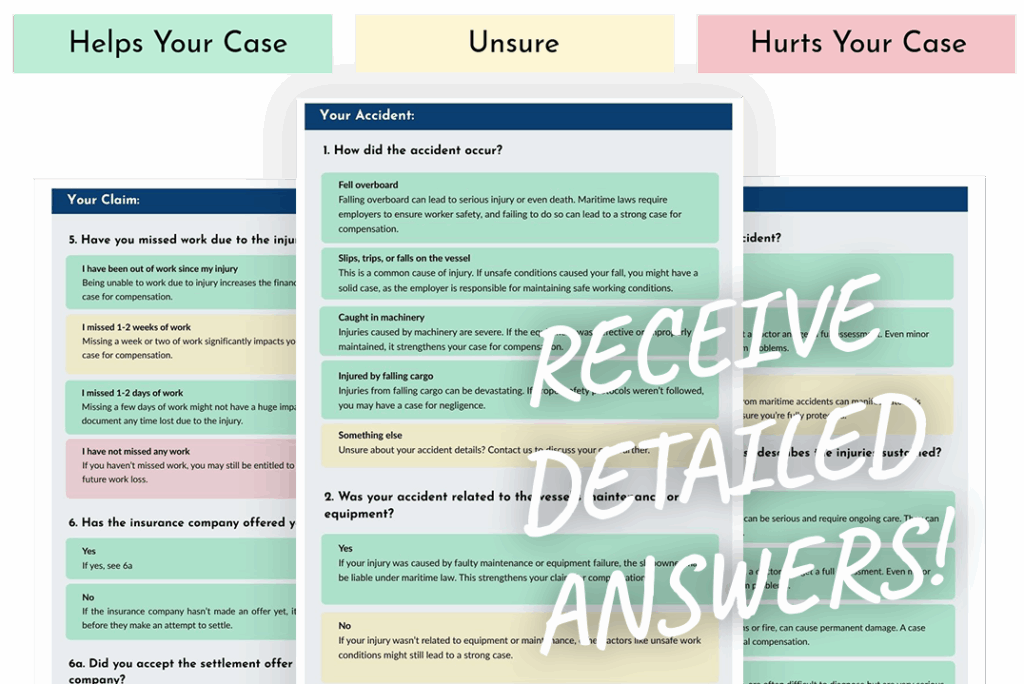
Do you want to know if the details of your Maritime Accident HELP or HURT your case?
Take our short quiz to find out.
What Our Clients’ Say About Us
NATIONALLY RECOGNIZED ATTORNEYS




CONTACT US
Our experienced attorneys are here to guide you through every step of the process, from initial consultation to settlement or trial.
Free Case Review
Fill out the form below to contact Lambert Zainey and schedule a free, confidential consultation and discuss your case with an experienced attorney.