
Lift Boat Accidents
Over $1 Billion Recovered for Maritime Accident Victims. We are proud to have a reputation for aggressively fighting for the rights of injured workers.
Lift Boat Accident Lawyers for Gulf Coast Workers — Lambert Zainey Smith & Soso
Lift boats — also called jack-up boats — are self-propelled vessels equipped with retractable legs that can be lowered to the seabed, allowing the hull to be jacked up above the waterline to create a stable working platform. They are used throughout the Gulf Coast for offshore construction, well work, dive support, pipeline maintenance, and platform decommissioning.
Their unique design makes them versatile and valuable — and particularly dangerous. While jacked up they are exposed to weather and wave action in ways that fixed platforms are not. While underway they face instability risks that can become catastrophic in seconds. When something goes wrong on a lift boat, the consequences are severe and often fatal.
The Seacor Power disaster of April 2021 — in which 13 of 19 workers lost their lives when the lift boat capsized seven miles south of Port Fourchon in a severe thunderstorm — demonstrated how quickly a lift boat accident can become catastrophic, and how important experienced legal representation is for crews and families from the very beginning.
Lambert Zainey served as co-lead counsel in the federal Limitation of Liability litigation arising from that disaster. We represented 14 of the 19 people on board — including the widow of the captain — and secured resolution of all 19 claims by November 2023.
On This Page
Quick Facts
What Is a Lift Boat and Why Are They Dangerous?
A lift boat has three main operational phases, each with distinct risks.
While underway — the lift boat moves through open water with its legs retracted. This is when it is most vulnerable to instability. A vessel riding higher than normal due to loaded cargo, encountering unexpected sea conditions, or making a turn at speed can experience sudden and catastrophic loss of stability. The NTSB investigation into the Seacor Power capsizing found that the vessel’s trim at the time of the accident decreased its ability to resist capsizing after turning to port — combined with its speed, shifting equipment, and leg movement.
During jacking operations — as the legs are lowered to the seabed and the hull is raised, the boat is in a transitional state. Uneven seabed conditions, a leg striking soft sediment, or mechanical failure during this phase can cause sudden listing or structural failure.
While jacked up — once elevated the boat is exposed to wind and wave forces. Severe weather, unexpected storm intensification, or operating beyond the vessel’s rated limits can destabilize the structure.
Lift boats are used throughout the Gulf for:
Lambert Zainey and the Seacor Power — What Our Experience Means for You
On April 13, 2021, the lift boat Seacor Power capsized approximately seven miles south of Port Fourchon, Louisiana, while transiting to an offshore work site in deteriorating weather. Of the 19 workers on board, only six survived. Six bodies were recovered. Seven remain missing, presumed dead.
The NTSB investigation found that the weather forecast provided to the crew on the morning of the incident was insufficient for weather-related decisions, and that none of the survivors were equipped with personal locator beacons — devices that would have significantly aided their rescue. The NTSB has recommended for the fourth time that the Coast Guard require all maritime workers to carry personal locator beacons. That recommendation remains unimplemented as of 2026.
U.S. District Judge Jane Triche Milazzo appointed Lambert Zainey as co-lead counsel in the Limitation of Liability litigation that followed — a complex federal process in which the vessel owner attempted to cap its financial exposure to the value of the vessel. We represented 14 of the 19 people on board and secured resolution of all 19 claims — seven Jones Act Death claims, six DOHSA claims, and six survivor personal injury claims — by November 2023.
For a full account of the litigation see our Seacor Power case resolution page. For background on how lift boats operate and what happened, see Skip Lambert’s radio interviews explaining the disaster. For the five-year retrospective on what changed and what has not, see Five Years After the Seacor Power Capsizing.
What this means for you: When a lift boat accident occurs, vessel owners invoke complex legal processes designed to limit what families can recover. We have navigated those processes at the highest level — in one of the most significant maritime disasters in recent Gulf history.
How Lift Boat Accidents Are Investigated — and Why It Matters for Your Claim
When a serious lift boat accident occurs, multiple agencies investigate simultaneously — and the vessel owner’s legal team is working from the first moment.
The U.S. Coast Guard conducts a mandatory Marine Casualty Investigation for any accident involving significant loss of life, serious injury, or substantial property damage. The Coast Guard focuses on determining the cause and issuing safety recommendations — not on building a legal case for the families involved. The Seacor Power report was not released until more than two years after the capsizing.
The NTSB may investigate major maritime casualties independently. The NTSB investigated the Seacor Power and issued recommendations on personal locator beacons, weather information systems, and liftboat stability regulations — several of which remain unimplemented as of 2026.
The vessel owner’s legal team and insurers begin working from the moment the accident is reported. Their goal is to limit financial exposure — including gathering evidence and in some cases invoking the Limitation of Liability Act before families know their options.
Why this matters for your claim: Official investigations take years. Evidence — maintenance records, weather logs, dispatch communications, crew training records — can be lost, altered, or legally protected if not preserved immediately. Lambert Zainey files preservation letters and begins independent investigation from the first days after an accident, not after the official report is published.
Over $1 Billion Recovered for Maritime Accident Victims
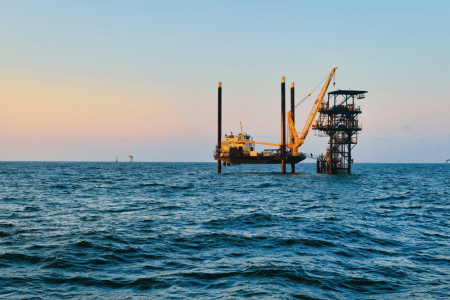
The liftboat Seacor Power capsized in the Gulf of Mexico during a storm on April 13, 2021, killing 13 of the 19 maritime workers on board. Hugh “Skip” Lambert was appointed co-lead liaison counsel and helped recover millions of dollars in damages for survivors and the families of the deceased.
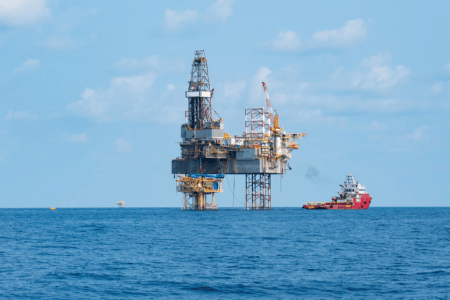
The Penrod mobile offshore drilling unit (MODU) collapsed during a violent hurricane in the Gulf of Mexico. The case turned on proving the operator’s failure to prepare the unit for the storm. Clients received millions of dollars in damages from the responsible parties.
Your Legal Rights as a Lift Boat Worker
Lift boats are generally considered vessels under maritime law. Crew members who qualify as seamen are entitled to the strongest protections available to any maritime worker.
The Jones Act
The Jones Act allows injured seamen to sue their employer directly for negligence. Your employer’s negligence need only play any part, even the slightest, in causing your injury — a significantly lower burden than standard negligence law. If you qualify as a seaman, this is your primary legal tool for compensation beyond maintenance and cure.
Deadline: 3 years from the date of injury.
Unseaworthiness
The vessel owner has an absolute duty to provide a vessel that is reasonably fit for its intended purpose. If an unsafe condition on the lift boat — a faulty jacking system, inadequate life safety equipment, a vessel operated beyond its stability limits — caused your injury, you have an unseaworthiness claim even if the owner did not know about the problem. Unseaworthiness is a strict liability doctrine — the unsafe condition itself is enough.
Maintenance and Cure
Injured lift boat seamen are entitled to maintenance and cure benefits — daily living expenses and medical coverage — from the date of injury until maximum medical improvement, regardless of fault. These benefits are owed even while the company disputes your negligence claim. Employers who wrongfully deny or terminate maintenance and cure may face additional punitive damages.
Death on the High Seas Act — For Families of Deceased Workers
When a lift boat worker dies more than three nautical miles from shore, the Death on the High Seas Act (DOHSA) governs the wrongful death claim. DOHSA allows recovery for the financial support the deceased would have provided — lost wages, benefits, and household contributions. It does not allow recovery for grief, loss of companionship, or the deceased’s pre-death pain and suffering.
The Limitation of Liability Act — What Families Need to Know
When a maritime disaster occurs, vessel owners frequently invoke the Limitation of Liability Act — a federal law that allows them to attempt to cap their total liability to the post-accident value of the vessel. For a capsized or destroyed lift boat, that value can be near zero.
Successfully defeating a Limitation of Liability proceeding requires demonstrating that the owner had privity or knowledge of the negligent acts that caused the disaster. This is a complex legal argument that requires experienced maritime attorneys working immediately after the accident.
⚠️ Critical: When a vessel owner files a Limitation of Liability proceeding, claimants face a strict deadline — typically six months from when the owner had notice of a claim — to file in that proceeding. Missing it can permanently eliminate your right to participate. If you have received notice that such a proceeding has been filed, contact Lambert Zainey immediately.
Lambert Zainey has direct experience fighting these proceedings. In the Seacor Power litigation, we were appointed co-lead counsel specifically to represent families navigating both DOHSA claims and a Limitation of Liability proceeding simultaneously.
Common Causes of Lift Boat Accidents
Instability and Capsizing
Capsizing is the defining catastrophic risk of lift boat operations. It can result from:
- Leg punch-through — a leg penetrating soft seabed or encountering uneven bottom, causing sudden uncontrolled listing
- Severe weather — winds and waves exceeding the vessel’s operational limits, particularly when the crew received inadequate weather information or when the operator ignored available forecasts
- Improper loading — uneven cargo distribution creating dangerous list conditions
- Mechanical leg failure — structural failure of a jacking leg during transit or operation
The NTSB has recommended the Coast Guard modify liftboat stability regulations to require greater stability for newly constructed restricted-service lift boats — a direct result of the Seacor Power investigation and an acknowledgment that existing stability standards were insufficient.
Jacking System Failures
The hydraulic and mechanical systems that raise and lower the legs require regular maintenance and inspection. Failures — hydraulic leaks, gear failures, electrical malfunctions — can cause the hull to drop suddenly, trap crew members, or leave the vessel in a dangerously unstable transitional state. Jacking system failures are almost always traceable to deferred maintenance or inadequate inspection.
Crane Accidents and Deck Injuries
Most lift boats are equipped with cranes for cargo transfer and platform work. Crane collapses, dropped loads, and workers struck by swinging equipment are recurring causes of serious injury. Deck injuries from slippery surfaces, unsecured equipment, and falls from elevated work areas are equally common.
Fires and Explosions
Lift boats working near oil and gas infrastructure are exposed to flammable gases and ignition sources. In August 2024 two crew members were airlifted to safety after a fire aboard a U.S.-registered liftboat in the Gulf of Mexico — a reminder that fire risks are ongoing and not limited to catastrophic events.
Personnel Transfer Accidents
Workers being transferred to and from lift boats via personnel baskets, swing ropes, or gangways face the same risks as any offshore transfer operation. See our vessel transfer accidents page for a detailed explanation of transfer accident liability.
Collisions
While underway, lift boats can collide with other vessels, platforms, or underwater obstructions. Collisions generate claims under general maritime law against the operators of all vessels involved.
Common Injuries in Lift Boat Accidents
|
Injury Type |
Common Causes |
|
Drowning |
Capsizing, man overboard |
|
Traumatic brain injury |
Falls, impacts during capsizing, struck by equipment |
|
Spinal cord injury and paralysis |
Falls, crushing, structural collapse |
|
Hypothermia |
Extended time in water after capsizing |
|
Crush injuries |
Structural collapse, caught-in equipment |
|
Amputations |
Caught in jacking machinery, crane equipment |
|
Burns |
Fires and explosions |
|
Multiple fractures |
Falls, capsizing impacts |
|
Wrongful death |
Any of the above |
Who Can Be Held Liable After a Lift Boat Accident
Your employer — Jones Act seamen can sue their employer directly for negligence — including negligent dispatch decisions, inadequate training, failure to maintain the vessel, and failure to provide adequate safety equipment.
The vessel owner — Responsible for providing a seaworthy vessel. An unseaworthy condition that contributed to the accident creates liability regardless of negligence.
Equipment manufacturers — If a defective jacking system, crane component, or safety device contributed to the accident, the manufacturer can be held liable through a product liability claim.
Seabed survey contractors — If a punch-through resulted from an inadequate seabed survey, the company that conducted it may bear independent liability.
Other vessel operators — If a collision contributed to the accident, the operator of the other vessel can be held liable under general maritime law.
The dispatching company — When a lift boat is dispatched into conditions exceeding its operational limits, the company that made that decision bears direct liability for the foreseeable consequences.
What to Do After a Lift Boat Accident
Why Lift Boat Workers Trust Lambert Zainey











Frequently Asked Questions About Lift Boat Accidents
Knowing your rights is the first step toward securing fair compensation after a maritime injury. This section answers key questions to empower you with the information you need to protect your claim.
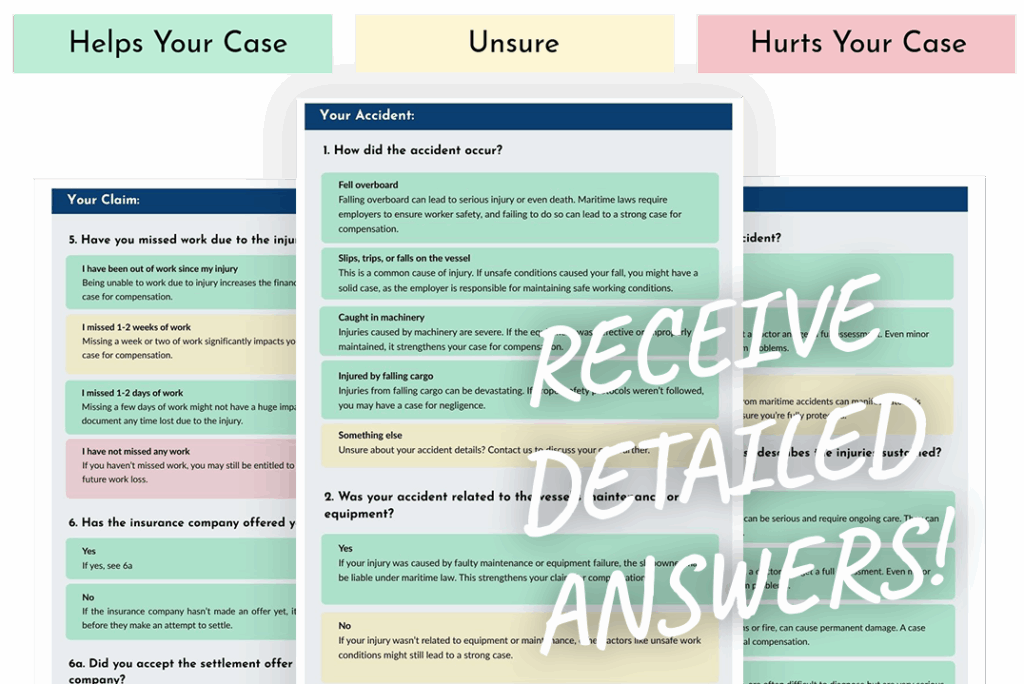
Do I Have A Case? Quiz
Do you want to know if the details of your Maritime Accident HELP or HURT your case?
Take our short quiz to find out.
What Our Clients’ Say About Us
NATIONALLY RECOGNIZED ATTORNEYS




CONTACT US
Our experienced attorneys are here to guide you through every step of the process, from initial consultation to settlement or trial.
Free Case Review
Fill out the form below to contact Lambert Zainey and schedule a free, confidential consultation and discuss your case with an experienced attorney.