

Oil Rig Accidents
Over $1 Billion Recovered for Maritime Accident Victims. We are proud to have a reputation for aggressively fighting for the rights of injured workers.
Oil Rig Accident Lawyers for Gulf Coast Workers — Lambert Zainey Smith & Soso
Oil rigs and offshore platforms are among the most hazardous workplaces in the world. Workers operate heavy machinery, handle high-pressure systems, and work with flammable gases and chemicals — often in extreme weather, far from shore, and on rotating shifts that leave little margin for error. When something goes wrong, the injuries are rarely minor.
According to BSEE data, from 2021 to 2023 there were 392 fires, five explosions, 17 collisions, and various other incidents on offshore oil rigs leading to 566 injuries and three fatalities. In 2024, BSEE recorded 1 fatality, 223 fires, and 388 injuries on the Outer Continental Shelf. These numbers reflect only incidents that were formally reported — the actual toll on workers is higher.
When an oil rig accident occurs in the Gulf of Mexico, determining who is responsible and which laws apply requires attorneys who understand offshore operations, maritime law, and the specific ways oil and gas companies attempt to limit their liability after a serious accident.
Lambert Zainey has represented workers and families injured in Gulf Coast oil rig and platform accidents for nearly 50 years. We understand the equipment, the operations, the safety standards, and the legal frameworks that govern these cases
On This Page
Key Takeaways
Which Laws Apply to Oil Rig Accident Claims
The law that governs your oil rig injury claim depends on the type of structure you were working on and your specific job classification. Getting this determination right is the foundation of your case — it affects what you can recover, who you can sue, and how long you have to act.
Fixed Platforms — OCSLA and the LHWCA
If you were injured on a fixed platform permanently attached to the seabed on the Outer Continental Shelf, the Outer Continental Shelf Lands Act (OCSLA) governs your claim. OCSLA does two things simultaneously.
First, it extends LHWCA workers’ compensation benefits — covering medical expenses and a portion of lost wages — from your employer, regardless of fault.
Second, it allows you to bring negligence claims against other responsible parties — platform operators, contractors, and equipment manufacturers — using the law of the nearest state, typically Louisiana.
Mobile Rigs and Vessels — Jones Act and General Maritime Law
Mobile Offshore Drilling Units (MODUs) — jack-up rigs when floating or moving, semi-submersibles, and drillships — are generally considered vessels under maritime law. Workers on these structures who qualify as seamen may be entitled to Jones Act protections, which allow injured seamen to sue their employer directly for negligence. Qualified seamen are also entitled to maintenance and cure benefits — daily living expenses and medical coverage — regardless of fault.
Under the Jones Act, an employer’s negligence need only play “any part, even the slightest” in causing the injury — a significantly lower burden than standard negligence law.
Whether a jack-up rig qualifies as a vessel depends on its status at the time of the accident — jacked up and resting on the seabed versus floating and in transit. This is a fact-specific determination that can significantly affect the value of your claim and which deadlines apply.
Deadline: 3 years from the date of injury for Jones Act claims.
>> Learn about Jones Act claims
Unseaworthiness — An Additional Claim for Vessel Workers
Workers on vessels and mobile rigs may also have an unseaworthiness claim under general maritime law, independent of any Jones Act negligence claim. Vessel owners are legally required to provide a vessel that is reasonably fit for its intended purpose. If an unsafe condition on the vessel — defective equipment, inadequate crew, dangerous work environment — caused your injury, the vessel owner can be held liable even without proof of negligence.
>> Learn about unseaworthiness claims →
Determining which framework applies to your specific situation requires an experienced offshore attorney reviewing the facts of your case. See our main offshore injury page for a full overview of all applicable legal frameworks.
Over $1 Billion Recovered for Maritime Accident Victims
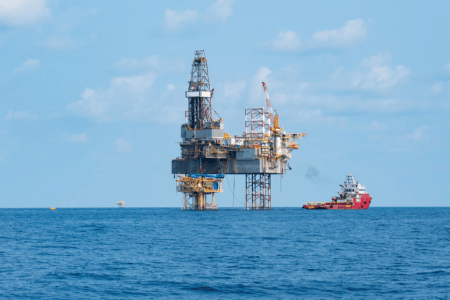
The Penrod mobile offshore drilling unit (MODU) collapsed during a violent hurricane in the Gulf of Mexico. The case turned on proving the operator’s failure to prepare the unit for the storm. Clients received millions of dollars in damages from the responsible parties.
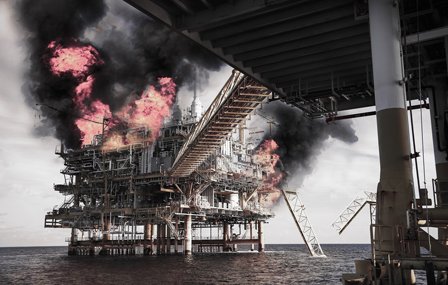
Arco cryogenic platform explosion caused by improper cold cut of Southern Natural Gas pipeline. The case centered on showing that the cold-cut procedure violated pipeline safety standards, triggering the explosion that killed and injured platform workers. Settlement for the injured and deceased in approximately twelve months.
Common Causes of Oil Rig Accidents
Oil rig accidents are almost always the result of preventable failures — inadequate maintenance, insufficient training, production pressure that leads to safety corners being cut, or failure to enforce established safety protocols. BSEE is required by law to investigate deaths, serious injuries, fires, and pollution events arising from offshore operations, and publishes investigation reports detailing the causes of each incident and recommendations to prevent recurrence. Those reports consistently identify the same categories of failure.
Fires and Explosions
Fires and explosions are the most catastrophic events on an oil rig. Common causes include blowouts from loss of well pressure control, ignition of flammable gases from leaks or equipment failures, unsafe hot work operations such as welding or cutting near gas-present areas, and electrical system failures. The Bureau of Safety and Environmental Enforcement recorded 223 fires on the Outer Continental Shelf in 2024 alone — making fires the single most common category of offshore incident.
See our detailed post on blast injuries from offshore and refinery explosions for a full breakdown of injury types and legal rights.
Falls
Falls are one of the leading causes of serious injury and death on oil rigs. Workers fall from derricks, elevated decks, stairs, and scaffolding due to missing or inadequate guardrails, slippery surfaces from oil, mud, or water, poor lighting, and damaged or missing grating. Platform operators have a legal duty to maintain safe walking and working surfaces — when they fail that duty, injured workers have claims under OCSLA and general maritime law.
Struck-By and Caught-In Accidents
Workers are seriously injured when struck by falling tools or pipe, swinging crane loads, or snapping lines and hoses under tension. Caught-in accidents — where a limb or body is caught in draw works, pipe tongs, rotating machinery, or other moving equipment — frequently result in amputations, crush injuries, and permanent disability. These accidents are almost always traceable to inadequate machine guarding, insufficient training, or failure to enforce lockout/tagout procedures.
Drilling Equipment Failures
Failures of top drives, draw works, blowout preventers (BOPs), pipe handling machinery, mud pumps, and safety systems cause serious injuries and fatalities. Equipment failures are frequently the result of deferred maintenance, the use of substandard replacement parts, or inadequate inspection protocols. When equipment failure causes an injury, both the operator responsible for maintenance and the manufacturer of the failed component may share liability.
Well Control Failures and Blowouts
Loss of well pressure control allows oil and gas to escape uncontrolled, creating conditions for catastrophic fires and explosions. Blowouts result from inadequate training, improper well control procedures, or failure of safety-critical equipment such as blowout preventers. BSEE mandates specific well control training and equipment standards — violations of those standards are central evidence in blowout liability cases.
Structural Failures
Corrosion, design deficiencies, inadequate maintenance, and severe storm conditions can cause structural failures in platform components — decking, stairs, support structures, and in extreme cases entire platform sections. Operators are required to conduct regular structural inspections and assessments. When those inspections are skipped or findings are ignored, structural failures that injure workers create significant liability.
Toxic Exposure
Exposure to drilling muds, chemicals, and gases including hydrogen sulfide (H2S) can cause serious respiratory damage, chemical burns, and in cases of acute H2S exposure, rapid incapacitation and death. Operators are required to maintain functioning gas detection systems, provide appropriate personal protective equipment, and ensure adequate ventilation. Failures in any of these areas give rise to negligence claims under OCSLA and maritime law.
Injuries We Handle After Oil Rig Accidents
Oil rig accidents frequently cause injuries that are permanent, life-altering, and require long-term medical management.
|
Injury Type |
Common Causes |
|
Severe burns |
Fires, explosions, chemical exposure |
|
Traumatic brain injury |
Falls, struck-by accidents, blast wave |
|
Spinal cord injury and paralysis |
Falls, crushing, structural failures |
|
Amputations |
Caught-in machinery, explosions |
|
Crush injuries |
Equipment failures, structural collapse |
|
Blast injuries |
Explosions and blowouts |
|
Lung damage |
Toxic gas exposure, blast wave, smoke inhalation |
|
Internal organ damage |
Blast wave, crushing, high-pressure line failures |
|
Broken bones |
Falls, struck-by accidents |
|
Wrongful death |
Any of the above |
The long-term nature of these injuries — many of which require ongoing specialist care, rehabilitation, and permanent lifestyle adjustments — means that early settlement offers from employers and insurers almost never reflect the true cost. An experienced attorney will document the full lifetime impact of your injuries before any settlement is considered.
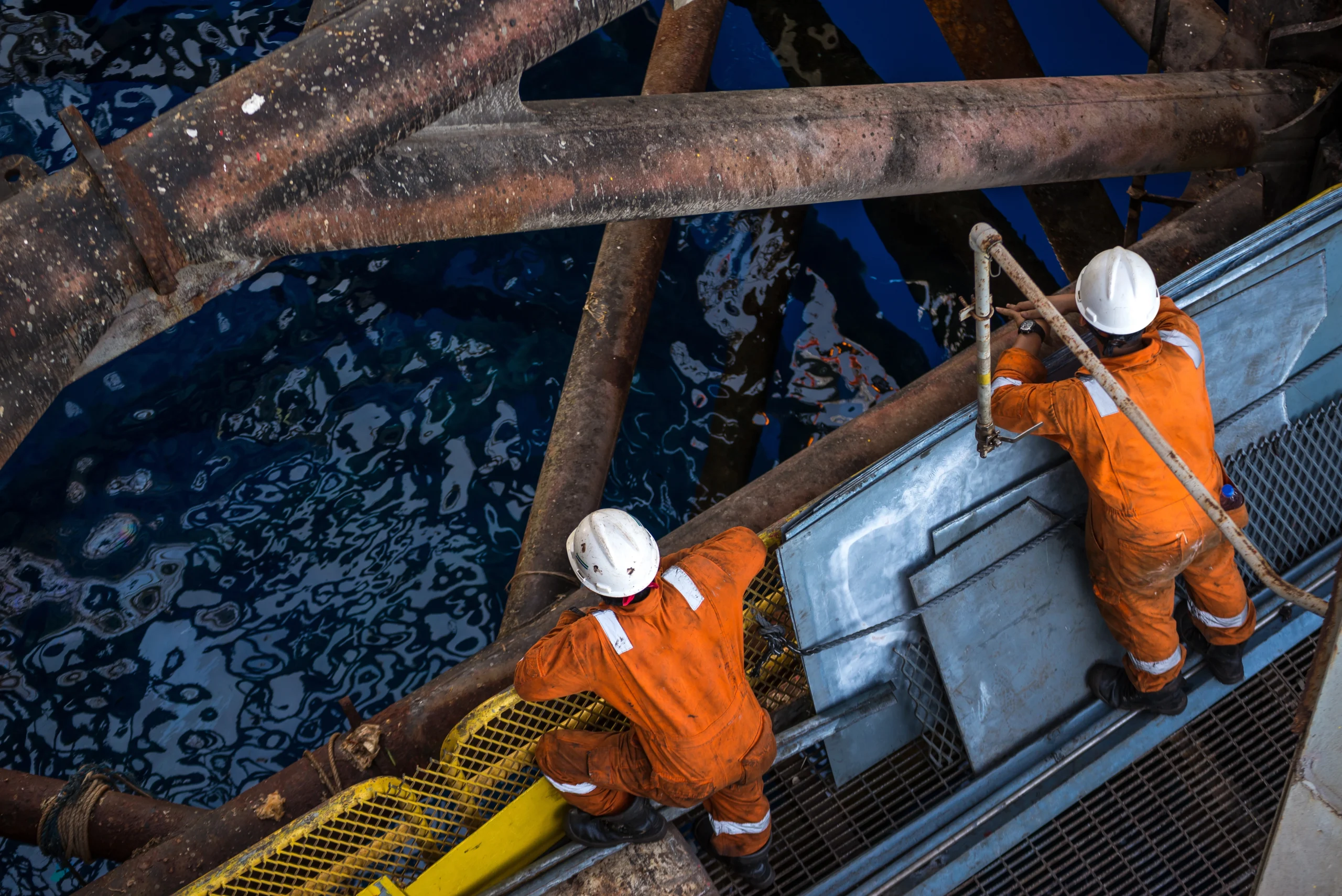
Who Can Be Held Liable After an Oil Rig Accident
Identifying every responsible party is one of the most important things Lambert Zainey does in the early stages of an oil rig accident case. Multiple parties often share liability simultaneously.
In most oil rig accident cases Lambert Zainey investigates all potential defendants simultaneously. Maximum recovery almost always requires pursuing every avenue of liability — not just the most obvious one.
What to Do Immediately After an Oil Rig Accident
The steps you take in the hours and days after an oil rig accident directly affect your ability to recover full compensation.
Why Oil Rig Workers Trust Lambert Zainey
Handling tough oil rig cases takes the right skills:












Frequently Asked Questions
Working on an oil rig can be dangerous, and injuries are often serious. This section answers key questions to help you understand your rights and what steps you can take after an accident.
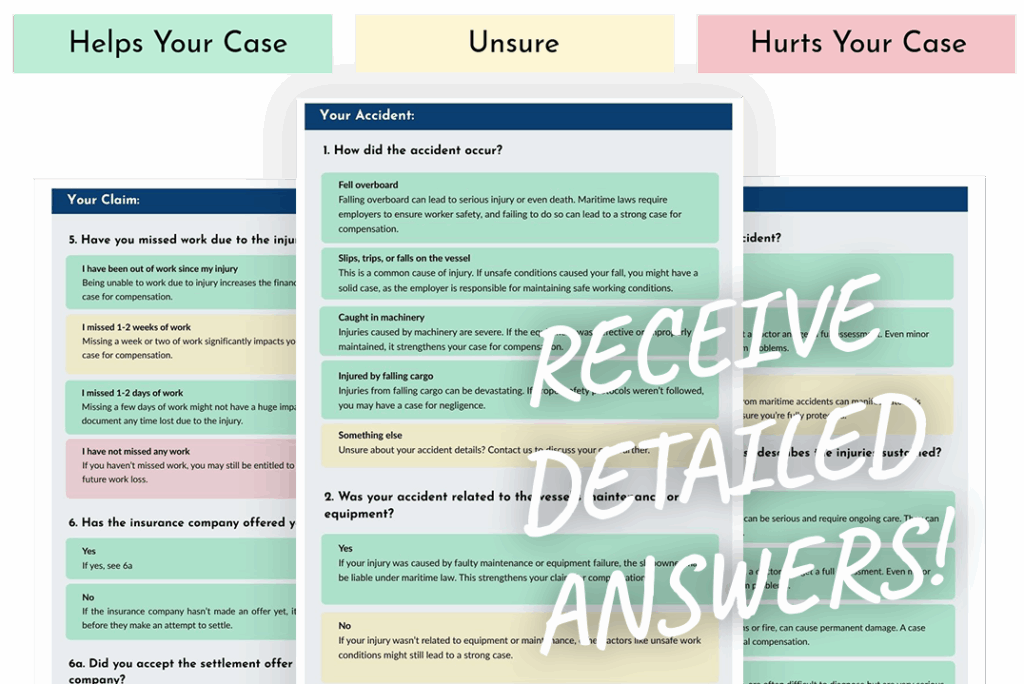
Do I Have A Case? Quiz
Do you want to know if the details of your Maritime Accident HELP or HURT your case?
Take our short quiz to find out.
What Our Clients’ Say About Us
NATIONALLY RECOGNIZED ATTORNEYS





CONTACT US
Our experienced attorneys are here to guide you through every step of the process, from initial consultation to settlement or trial.
Free Case Review
Fill out the form below to contact Lambert Zainey and schedule a free, confidential consultation and discuss your case with an experienced attorney.