
- Chemical exposure is one of the most legally complex maritime injury types because many diseases, including cancer, mesothelioma, lung damage, and neurological injury, develop years or decades after the exposure.
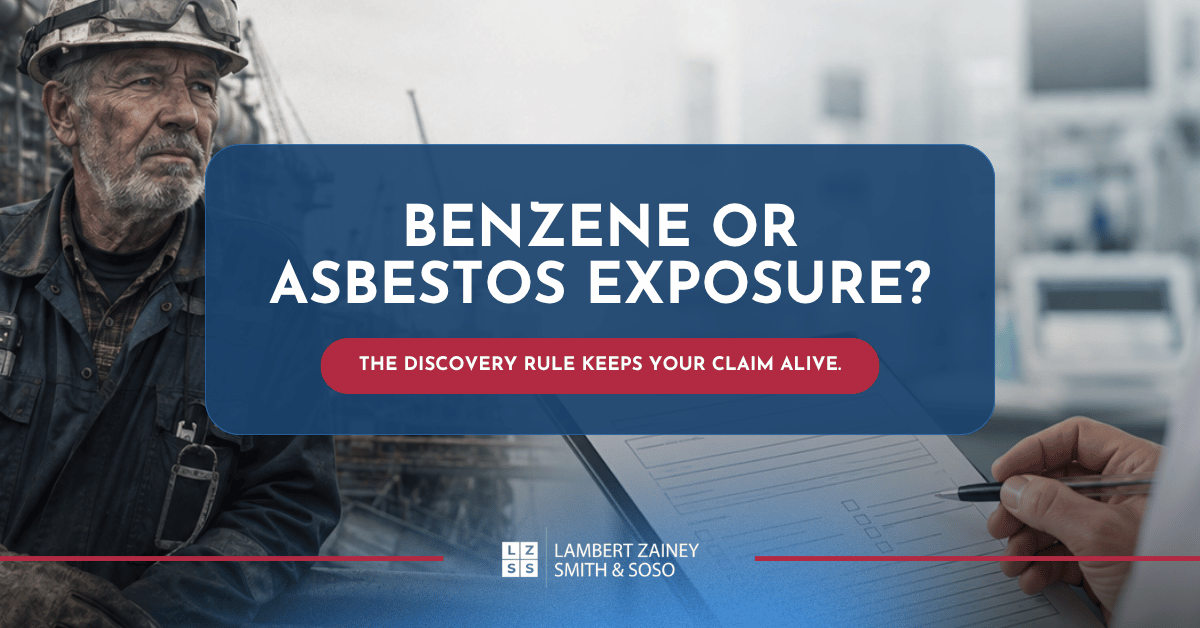
- The discovery rule means the three-year Jones Act statute of limitations may start from when you were diagnosed or should have known your illness was work-related, not from the date of the original chemical exposure. Do not assume you have missed your deadline.
- Multiple parties may be liable in a chemical exposure case: your employer for failing to provide adequate safety equipment and training, the chemical manufacturer for a defective or inadequately labeled product, and the vessel owner if the vessel lacked adequate safety equipment.
- Jones Act seamen exposed to hazardous chemicals are entitled to maintenance and cure for all medical treatment, including long-term treatment for cancer, mesothelioma, and chronic lung disease.
- Do not accept any settlement offer or sign any release before speaking with a maritime attorney. Early offers in chemical exposure cases almost never account for the full long-term cost of treatment.
Maritime workers handle some of the most dangerous chemicals in any industry. Deck cleaners, drilling fluids, cargo fumes, diesel exhaust, asbestos insulation, solvents, acids, and pesticides are all part of the daily working environment on vessels and offshore platforms across the Gulf Coast.
The injuries these exposures cause are not always immediate. Cancer, mesothelioma, chronic lung disease, and neurological damage can take years or decades to appear after the original exposure. By the time a maritime worker is diagnosed, they may assume they have missed their chance to file a legal claim.
In most cases, they have not. Lambert Zainey has represented chemical exposure victims across the Gulf Coast for nearly 50 years. Here is what you were exposed to, what it can do to your health, and what your legal rights are.
Chemical Exposure Injuries: Physical and Health Hazards
OSHA defines any chemical that presents a physical hazard or health hazard as a hazardous chemical.
Physical hazards are chemicals that present a physical danger. These can be explosive, combustible and flammable liquids, aerosols, gases and solids; compressed gases; oxidizers; pyrophoric (compounds that ignite when exposed to the air); organic peroxides; and water-reactive substances (compounds that react when exposed to water).
A health hazard is a chemical that can cause acute or chronic health effects to the body. These can consist of materials such as carcinogens, irritants, corrosives and other toxic substances.
The following chemicals are commonly found on vessels, offshore platforms, port facilities, and in maritime cargo. If you were regularly exposed to any of these substances and have since developed a health condition, contact a maritime attorney before assuming your exposure is too far in the past to matter.
Equipment failure, intentional or illegal acts, bad weather, human errors, improper filling, loading or packaging, unauthorized/improper dumping, collisions, fires and explosions are just a few of the ways maritime workers may suffer dangerous chemical exposure injuries.
Injuries Caused by Exposure to Hazardous Chemicals
Chemical exposure injuries range from immediate burns and respiratory damage to cancers and neurological conditions that develop over years. The long-term nature of many of these injuries is precisely why maritime workers often do not realize they have a legal claim until years after the exposure.
Depending on the type of chemical exposure, some workers may make a speedy, full recovery while others will experience lasting health problems that may require long-term medical treatment.
Symptoms of Exposure to Hazardous Chemicals
It is possible to be exposed to dangerous chemicals without realizing it at the time. Symptoms may appear immediately or may develop gradually over months and years. If you recognize any of these symptoms and work in a maritime environment, see a physician and contact a maritime attorney as soon as possible.
Get Our FREE Guide to Protect Your Claim
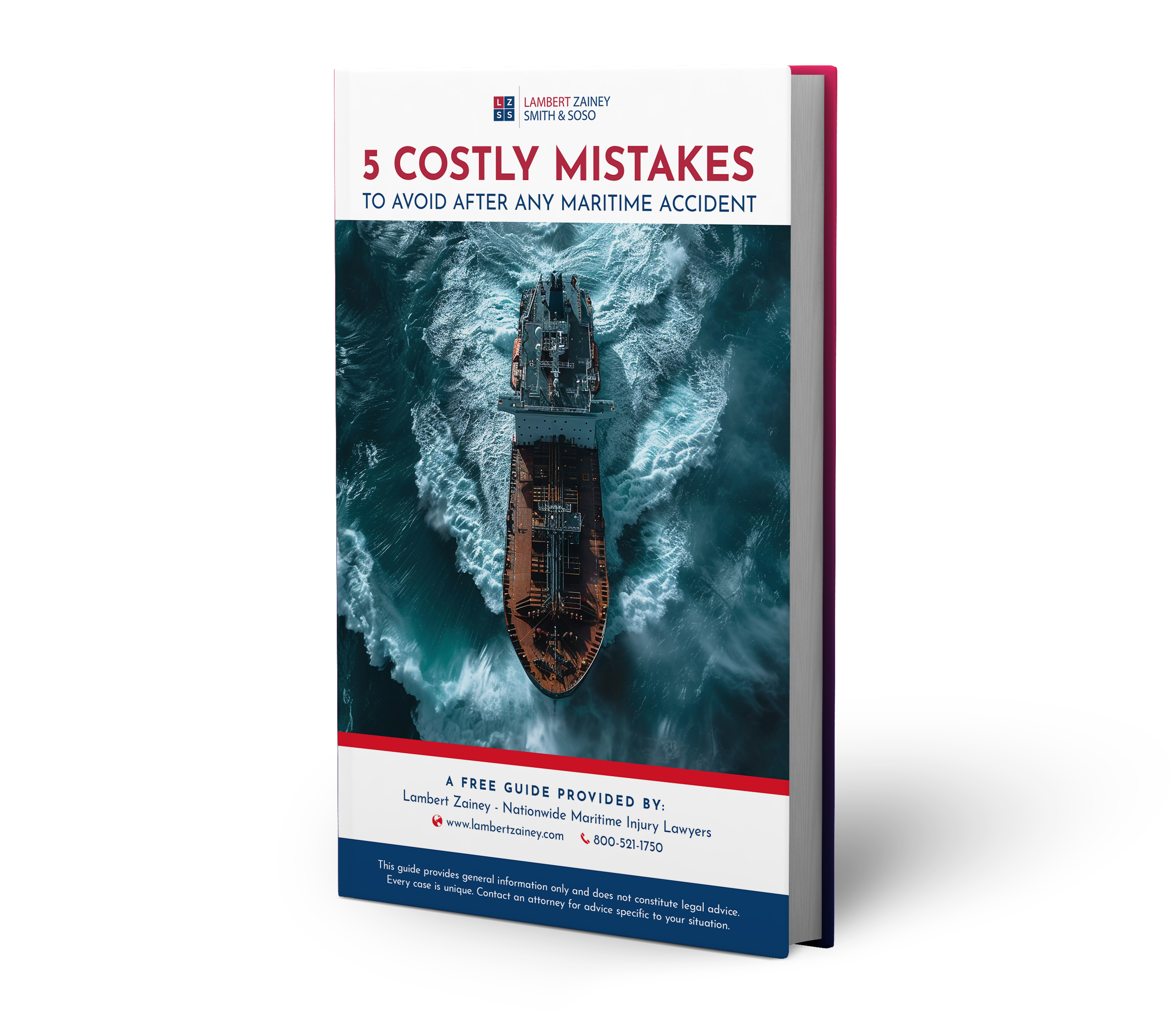
What you do after an accident is critical. Insurance companies will try to get you to make mistakes that can hurt your claim. Our free guide can help you avoid these traps.
Download our complimentary guide: “5 Costly Mistakes to Avoid After Any Maritime Accident” to arm yourself with the knowledge you need to protect your rights.
What to Do After a Maritime Chemical Exposure Injury
Step 1: See a doctor immediately.
If you have symptoms you believe may be related to chemical exposure on a vessel or offshore platform, get medical evaluation as soon as possible. Tell your doctor about every chemical you were exposed to at work, how long the exposure lasted, and what protective equipment was or was not provided.

Step 2: Document your exposure history.
Write down every vessel or platform you worked on, what chemicals you were exposed to, how long the exposure lasted, and what safety equipment was available. Former co-workers, employment records, and vessel logs can help establish your exposure history.
Step 3: Do not accept your employer’s explanation of your illness.
Chemical manufacturers and employers frequently dispute the connection between workplace exposure and disease. Do not accept their medical opinions without independent evaluation.
Step 4: Contact Lambert Zainey before the deadline.
The discovery rule may give you more time than you think, but it does not give you unlimited time. Contact us as soon as you are diagnosed with any condition you believe may be connected to chemical exposure at work. Contact us for a free, confidential consultation.
The Discovery Rule — Why You May Still Have a Claim Even Years After the Exposure
The standard Jones Act statute of limitations is three years from the date of injury. For most maritime injuries, the date of injury is obvious. For chemical exposure injuries, it is not.
Many of the most serious chemical exposure diseases take years or decades to develop. A maritime worker exposed to asbestos in the 1990s may not receive a mesothelioma diagnosis until 2025. A worker exposed to benzene may develop leukemia a decade after leaving the vessel.
Under the discovery rule, the three-year clock begins running from the date you were diagnosed with the condition, or from the date you knew or reasonably should have known that your illness was connected to your maritime chemical exposure.
What this means:
- If you have been diagnosed with cancer, mesothelioma, chronic lung disease, or any other serious illness you believe may be connected to chemical exposure on a vessel or offshore platform, contact a maritime attorney immediately, regardless of how long ago the exposure occurred.
- Do not assume you have missed the deadline. The analysis of when the three-year clock started requires legal judgment and depends on the specific facts of your diagnosis and your exposure history.
- Do not assume your employer’s position on the cause of your illness is correct. Chemical manufacturers and maritime employers frequently dispute the connection between workplace exposure and disease.
For a full explanation of how the statute of limitations works in chemical exposure cases and when exceptions may apply, see our post on the Jones Act statute of limitations.
Who Can Be Held Liable for Maritime Chemical Exposure Injuries
Chemical exposure cases often involve multiple potentially liable parties, which is why having an experienced attorney investigate from the beginning is critical.
Your employer.
Jones Act seamen can sue their employer directly for negligence if the employer failed to provide adequate protective equipment, failed to train workers on chemical hazards, or required workers to handle chemicals in unsafe conditions. OCSLA platform workers can pursue third-party claims against the platform operator for the same failures.
The chemical manufacturer.
If a chemical product was defective, inadequately labeled, or lacked proper safety warnings, the manufacturer can be held liable through a product liability claim. Product liability claims do not require proving negligence, only that the product was defective and caused the harm.
The vessel owner.
A vessel that lacks adequate ventilation, chemical storage, emergency wash stations, or protective equipment is legally unseaworthy. An unseaworthiness claim against the vessel owner can be pursued by Jones Act seamen independently of any negligence claim.
Third-party contractors.
If a maintenance contractor, cargo handler, or service company negligently handled or stored the chemical that caused your exposure, that contractor bears independent liability.
Your Legal Rights After a Maritime Chemical Exposure Injury
If you qualify as a Jones Act seaman:
You can sue your employer directly for negligence under the Jones Act if the exposure resulted from their failure to provide safe working conditions, adequate protective equipment, or proper chemical handling training. You are also entitled to maintenance and cure benefits from the date of diagnosis regardless of fault. This includes all medical treatment for cancer, lung disease, or other chemical exposure conditions.
If you work on a fixed offshore platform:
Your claim is governed by OCSLA and the LHWCA, which provide no-fault workers’ compensation benefits and allow separate negligence claims against platform operators, chemical manufacturers, and contractors.
Critical deadline for platform workers: Because chemical exposure injuries are treated as occupational diseases under the LHWCA, the deadlines run differently than for a typical on-the-job accident. You must notify your employer within one year of becoming aware that your condition is connected to your work, and file a formal LHWCA claim within two years of that same awareness date. Missing these deadlines can jeopardize your right to benefits, so don’t wait to speak with an attorney once you have a diagnosis.
Frequently Asked Questions
Injured by Chemical Exposure in a Maritime Job? Here Is What to Do Next.
Chemical exposure cases require attorneys who understand both the medical science and the legal framework, and who know how to investigate exposure histories, identify all liable parties, and counter employer and manufacturer defenses.
- Nearly 50 years representing maritime workers injured by chemical exposure across the Gulf Coast
- Experience with Jones Act, product liability, unseaworthiness, and OCSLA claims in chemical exposure cases
- Over $1 billion recovered for injured maritime workers and their families
- No fees unless we recover for you
Contact Lambert Zainey today for a free, confidential consultation — no fees unless we recover for you. Call us at 800-521-1750.