
After an offshore helicopter crash, one of the first things investigators look for is whether the pilot made a mistake. “Pilot error” is one of the most common findings in federal helicopter accident reports. It is also one of the most convenient findings for manufacturers and operators, because it shifts the blame onto an individual who is often no longer alive to dispute it.
But pilot error findings rarely tell the whole story.In case after case, independent investigations conducted by attorneys representing crash victims and their families have revealed that what looked like pilot error was actually the result of a defective part, a mechanical failure that went undetected during maintenance, or a design flaw the manufacturer knew about but failed to correct. Sometimes, the official National Transportation Safety Board (NTSB) investigation misses these causes—or doesn’t look deeply enough for them.
- When an official investigation blames an offshore helicopter crash on “pilot error,” it does not automatically end the legal liability of other parties. Manufacturers, maintenance companies, and operators can still be held responsible.
- Helicopter manufacturers and parts makers have significant financial interests in NTSB investigations and are sometimes permitted to participate in ways that can influence the findings.
- A “pilot error” determination by the NTSB is not binding in a civil court. Independent investigations by experienced maritime and aviation attorneys frequently reveal additional causes that the official report missed or minimized.
- Families of crash victims should consult a maritime attorney before accepting any official determination of cause or any settlement offer—especially when pilot error is cited.
When “Pilot Error” Is the Wrong Answer — Industry Examples
To understand how offshore crashes are investigated, it helps to look at historical examples in the broader aviation industry. When manufacturers or operators have a financial interest in the outcome of an investigation, pilot error is sometimes identified as the primary cause without a thorough examination of whether mechanical failure or defective parts played a fatal role.
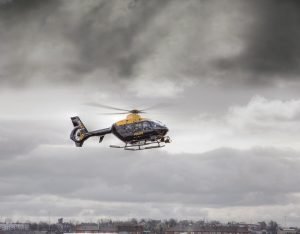
The Robinson R-44 Crash — Pilot Error or Defective Fuel System?
In several highly publicized crashes involving popular civilian transport helicopters, the NTSB’s initial reports pointed heavily to pilot error as the cause of the helicopter hitting the ground. The investigations appeared to be closed.
However, independent legal investigations later revealed a different picture. The catastrophic loss of life in these crashes wasn’t just caused by the impact; it was caused by post-crash fires due to defective, easily ruptured aluminum fuel tanks. The official investigations focused on why the helicopter went down, but independent legal teams focused on why the occupants didn’t survive a survivable impact. Because of these independent lawsuits, manufacturers were forced to pay settlements and ultimately redesign their fuel systems with crash-resistant bladder tanks—proving the original design was fatally inadequate.
The Danger of Defective Replacement Parts (Rotor Blades)
In another landmark aviation tragedy, a private helicopter suddenly shed pieces of its main rotor blade mid-flight, resulting in a fatal crash. The NTSB investigation took three years to complete. When the report was finally released, federal investigators controversially attributed the crash to an occupant bumping the flight controls, causing the rotor to strike the tail. This conclusion was heavily based on simulator tests run by the helicopter manufacturer itself and accepted by the NTSB.
Independent legal investigations subsequently dismantled this conclusion. They found physical evidence of fatigue cracks in the replacement rotor blade, indicating the part was unworthy for flight the moment it was installed — a conclusion supported by the parts maker’s own records.
What These Examples Tell Offshore Workers
The exact same helicopter manufacturers (like Airbus, Bell, and Sikorsky) and the same supply chains are used in offshore oil and gas transport. The underlying dynamic remains the same: a pilot error finding is the path of least resistance for investigators. It is the outcome least likely to trigger expensive product liability claims or expose systemic corporate safety failures.
Furthermore, NTSB investigations can take up to three years to publish. Under maritime law (like the Jones Act or the Death on the High Seas Act), the statute of limitations to file a lawsuit is strictly limited—typically three years. Families who wait for the official government report to be finalized may lose their right to sue entirely. An official determination of pilot error should be the starting point for an investigation, not the conclusion.
Why “Pilot Error” Is Especially Problematic in Offshore Helicopter Cases
In offshore helicopter operations, the pilot error question is even more complex. Offshore pilots operate under conditions that are significantly more demanding than typical commercial flight. They fly long distances over open water, land on small, moving platforms in unpredictable weather, and often face immense pressure from oil and gas operators to complete flights on tight schedules.
When a pilot makes a decision that contributes to a crash—flying into deteriorating weather, attempting a difficult platform approach, or failing to abort when an engine warning appears—that decision rarely happens in a vacuum. The questions an independent legal investigation must ask include:
The parties that benefit most from a “pure pilot error” finding are the helicopter manufacturer and the maintenance company. If the crash is blamed on the pilot’s judgment, neither of those corporations bears responsibility for the aircraft’s mechanical condition.
Do I Have A Case? Quiz
Do you want to know if the details of your Maritime Accident HELP or HURT your case?
Take our short quiz to find out.
Who Can Be Held Responsible When a Helicopter Crash Is Blamed on Pilot Error
What a Thorough Helicopter Accident Investigation Actually Examines
An NTSB investigation determines the “probable cause” of a crash for regulatory and statistical purposes. A legal investigation, conducted by a law firm on behalf of a victim’s family, has a broader goal: it examines every factor that contributed to the crash to hold the responsible corporations financially accountable.
A thorough independent investigation typically examines:
In many cases, this legal investigation reveals contributing factors that the official government report minimized. An experienced maritime and aviation attorney, working with independent crash reconstruction experts, examines the evidence through a different lens to uncover the truth.
Contact Lambert Zainey — Free, Confidential Consultation
If you or a family member was injured or killed in an offshore helicopter crash, do not accept a preliminary finding of “pilot error” as the final word.
The offshore injury lawyers at Lambert Zainey have the experience to conduct independent investigations, identify every responsible corporation, and fight for the full compensation you are owed under maritime law.
Contact us today for a free, confidential consultation. We serve offshore workers and their families across the Gulf Coast and throughout the United States.