
- Hypothermia is a recognized and compensable maritime injury. When an employer fails to provide adequate cold weather gear, personal flotation devices, or proper safety protocols, injured workers have Jones Act and unseaworthiness claims.
- Cold shock — not hypothermia — is the most immediate danger after falling overboard. In the first 3-5 minutes of cold water immersion, involuntary gasping, hyperventilation, and cardiac strain can cause drowning before hypothermia even develops.
- Gulf of Mexico water temperatures range from 53°F in winter to 85°F in summer near the coast. At 53°F, death from cold water exposure can occur in 1 to 3 hours — well within a single work shift without rescue.
- Vessel owners have an unseaworthiness obligation to equip vessels with functioning life rings, man-overboard equipment, immersion suits, and adequate personal flotation devices. A vessel lacking this equipment is legally unseaworthy.
- Do not sign anything or give recorded statements to your employer or their insurer before speaking with a maritime attorney.
Maritime workers face hypothermia risks that most people on land never encounter. Working in cold weather on open water, exposure to spray and rain, and the risk of falling overboard all create conditions where hypothermia can develop rapidly — and fatally.
What most maritime workers do not know: the majority of deaths from cold water exposure occur in the first two stages — cold shock and swimming failure — before hypothermia fully develops. An employer who fails to provide a life jacket, maintain functioning rescue equipment, or train crew on man-overboard response is not just violating safety guidelines — they are legally negligent.
Lambert Zainey has represented injured maritime workers across the Gulf Coast for nearly 50 years. This post explains both the medical reality of maritime hypothermia and your legal rights if it happens to you.
Cold Shock — The Most Immediate Danger
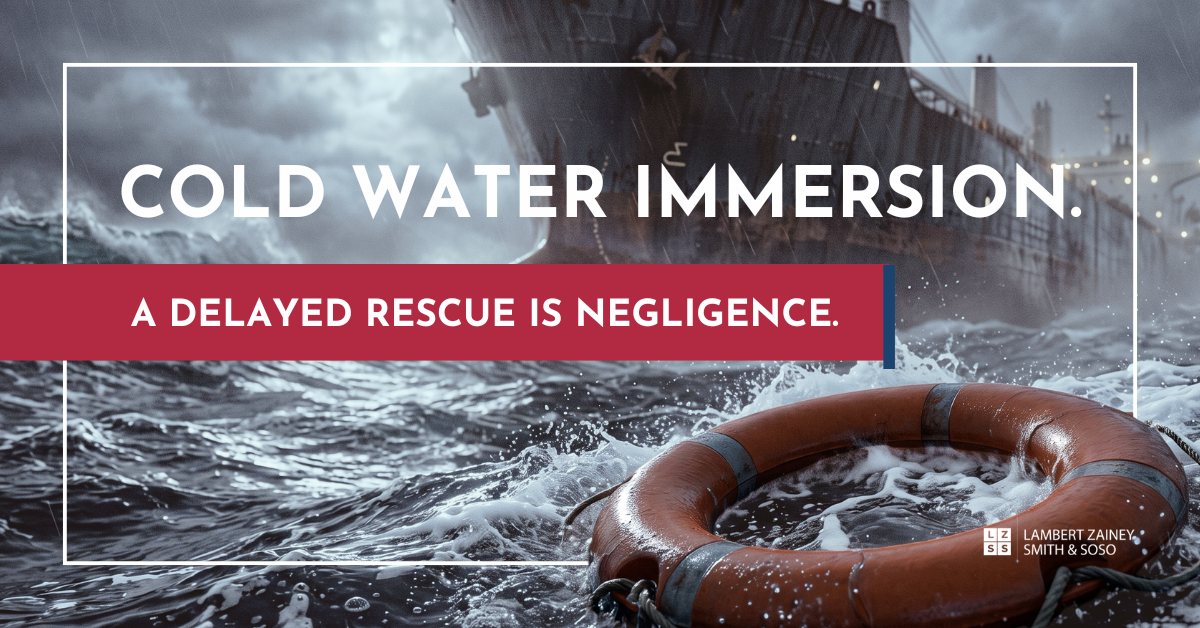
Before hypothermia sets in, cold water immersion triggers a more immediately dangerous response: cold shock.
Cold shock occurs within seconds of immersion. It can be just as severe in water temperatures of 50-60°F as in water at 35°F. During this stage, involuntary gasping and hyperventilation occur immediately — and even experienced swimmers can drown within minutes during the cold shock phase, particularly in rough waters or when not wearing proper flotation devices.
What this means legally: An employer who fails to provide proper flotation devices, delays rescue response, or fails to train crew on man-overboard procedures is exposing workers to a documented, immediate risk of death — not just a cold weather inconvenience. This is the foundation of the legal negligence argument in most cold water immersion cases.
Stage 1 — Cold shock (0-3 minutes): Involuntary gasping, hyperventilation, cardiac strain. Primary drowning risk.
Stage 2 — Swimming failure (3-30 minutes): Limbs lose function as blood flow is cut off. Even strong swimmers cannot stay afloat.
Stage 3 — Hypothermia (30 minutes+): Core body temperature drops. Loss of consciousness. Death risk increases significantly.
Stage 4 — Post-rescue collapse: Cardiac or brain failure can occur hours after rescue. All cold water immersion victims require emergency medical evaluation regardless of apparent condition.
What Is Hypothermia?
What is hypothermia? Basically, hypothermia is a dangerous drop in body temperature. Normal body temperature averages 98.6 degrees. When that temperature falls below 95 degrees, the affected person may begin to experience symptoms of hypothermia.
Two of the biggest causes of hypothermia for maritime workers are exposure to cold weather and immersion in cold water. Body heat is lost 25 times faster in cold water than in cold air. Immersion in cold water is especially dangerous and can lead to unconsciousness or even death in as little as 15 minutes.
Symptoms of Hypothermia
Some of the initial symptoms of hypothermia include:
As the body continues to lose heat, these symptoms appear:
When the body’s core temperature fall below a certain level and the body’s metabolic processes begin to shut down, we begin to see the symptoms of severe hypothermia:
Symptoms of the final stages of hypothermia include:
Cold Water Survival Times
The following data is used by the U.S. Coast Guard and OSHA for cold water safety standards. It illustrates why rapid rescue response and functioning man-overboard equipment are legal requirements — not optional safety measures.
|
Water Temperature |
Exhaustion or Unconsciousness |
Death May Occur |
|
32.5°F or below |
Less than 15 minutes |
15 to 45 minutes |
|
32.5°F to 40°F |
15 to 30 minutes |
30 to 90 minutes |
|
40°F to 50°F |
30 to 60 minutes |
1 to 3 hours |
|
50°F to 60°F |
1 to 2 hours |
1 to 6 hours |
|
60°F to 70°F |
3 to 12 hours |
3 hours or more |
Gulf of Mexico context: Winter water temperatures near the Louisiana coast typically fall between 53°F and 60°F — placing workers in the 50-60°F band where death can occur within 1 to 6 hours without rescue.
These timeframes apply to healthy adults in calm water. In rough seas, without a flotation device, or with exhaustion from attempted swimming, survival times are significantly shorter. An employer who is aware of these risks and fails to act on them bears direct legal responsibility for the consequences.
Did a delayed rescue cause your injuries to worsen? Evidence disappears quickly. Contact Lambert Zainey today for a free case evaluation.
Treating Hypothermia
If a person is suffering from cold water immersion hypothermia, the first thing to do is get them out of the water and indoors, if possible, as quickly as possible. Remove their wet clothes and dry them off. Call for emergency medical attention.
Restore warmth slowly, starting with the torso – warming the extremities first could cause shock. After putting on dry clothes, wrap the person in blankets to warm them up. If conscious, give them warm fluids (nothing containing caffeine or alcohol) to drink. If you use hot water bottles or chemical hot packs, don’t apply them directly to the body, wrap them in cloth to protect the skin. DON’T immerse them in warm water; this could result in a heart arrhythmia.
Closely monitor the victim’s breathing. If the person is not breathing, begin administering CPR immediately.
In moderate to severe cases of hypothermia, the victim will require emergency medical treatment as soon as possible
Preventing Hypothermia
Here are some tips for avoiding and preventing hypothermia:
What to Do After a Maritime Hypothermia Injury
Step 1: Accept emergency medical treatment immediately.
Hypothermia is a medical emergency. Accept all emergency care and follow up with a physician as soon as possible. Tell every treating provider the full circumstances — how long you were in the water, the water temperature, what safety equipment was or was not available. Request evaluation for post-rescue collapse even if you feel recovered. A complete medical record from the date of the incident is essential evidence.
Step 2: Report the incident in writing.
Report to your employer or vessel officer as soon as you are medically able. Note specifically what safety equipment was or was not available — life rings, immersion suits, personal flotation devices — and whether rescue response was delayed. Write down details while your memory is fresh.
Step 3: Do not sign anything before speaking with an attorney.
Man-overboard and cold water immersion incidents are investigated quickly by vessel owners and their insurers. Do not sign any incident report, medical release, or settlement document before speaking with a maritime attorney.
Step 4: Contact Lambert Zainey.
Hypothermia cases involving man-overboard incidents require immediate evidence preservation — vessel logs, weather records, equipment inspection records, and crew training records. Contact us for a free, confidential consultation.
Your Legal Rights After a Maritime Hypothermia Injury
Hypothermia injuries that result from employer negligence or an unseaworthy vessel give rise to the same legal claims as any other maritime injury. The key question is whether the hypothermia resulted from a failure the employer or vessel owner was responsible for preventing.
Common negligence scenarios:
- Failure to provide adequate cold weather protective gear
- Failure to provide functioning personal flotation devices or immersion suits
- Failure to conduct regular man-overboard drills
- Failure to maintain functioning life rings and rescue equipment
- Delayed rescue response after a man-overboard event
- Requiring workers to work in dangerous cold conditions without adequate protection
If you qualify as a Jones Act seaman:
You can sue your employer directly for negligence under the Jones Act if any of these failures contributed to your hypothermia. You are also entitled to maintenance and cure benefits from the date of injury regardless of fault — including all medical treatment required to recover from hypothermia and any secondary conditions it caused including cardiac complications, frostbite, and neurological effects.
If the vessel lacked adequate safety equipment:
A vessel without functioning immersion suits, adequate life rings, or man-overboard rescue equipment is legally unseaworthy. The vessel owner’s duty to provide a seaworthy vessel is absolute. If the absence of proper safety equipment contributed to the severity of your hypothermia or delayed your rescue, you have an unseaworthiness claim regardless of whether any individual was negligent.
If you work on a fixed offshore platform:
If hypothermia resulted from a fall from a fixed platform or during a vessel-to-platform transfer, OCSLA may govern your claim. Platform operators have the same duty to maintain adequate cold water safety equipment and emergency response protocols as vessel owners. The LHWCA provides no-fault workers’ compensation benefits regardless of fault.
⚠️ Critical deadline for platform workers: You must notify your employer within 30 days of injury and file a formal LHWCA claim within one year. Missing the 30-day notice permanently eliminates your right to benefits.
Frequently Asked Questions
Get Our FREE Guide to Protect Your Claim
What you do after an accident is critical. Insurance companies will try to get you to make mistakes that can hurt your claim. Our free guide can help you avoid these traps.
Download our complimentary guide: “5 Costly Mistakes to Avoid After Any Maritime Accident” to arm yourself with the knowledge you need to protect your rights.
Suffered Hypothermia in a Maritime Accident? Here Is What to Do Next.
When an employer fails to protect a maritime worker from cold water exposure or man-overboard risk, the legal consequences are real and the evidence must be preserved immediately.
- Nearly 50 years representing maritime workers injured in cold water and cold weather incidents across the Gulf Coast
- Experience with Jones Act, unseaworthiness, and OCSLA claims arising from man-overboard and cold exposure incidents
- Over $1 billion recovered for injured maritime workers and their families
- No fees unless we recover for you
Contact Lambert Zainey today for a free, confidential consultation — no fees unless we recover for you. Call us at 800-521-1750.