
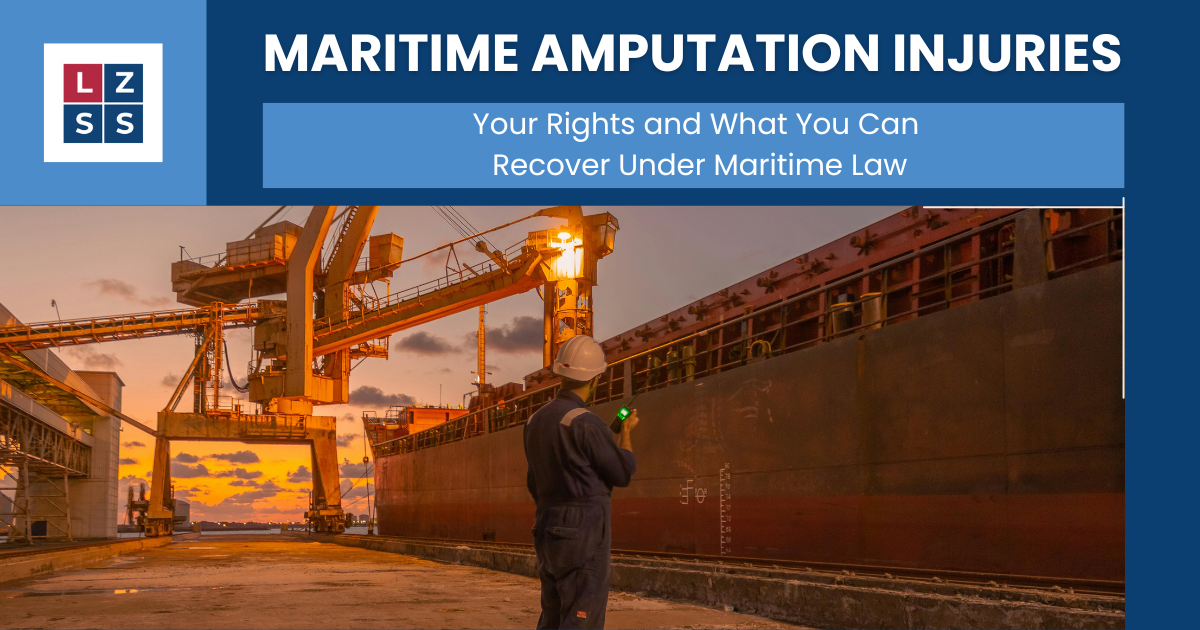
- Amputation injuries are among the most catastrophic and financially devastating injuries a maritime worker can suffer. Most workers who lose a major limb cannot return to their former occupation.
- Under the Jones Act, injured seamen can sue their employer directly for negligence and recover full compensation including pain and suffering, lost future earning capacity, and the cost of prosthetics and long-term rehabilitation — far beyond what workers compensation provides.
- The equipment types most commonly responsible for maritime amputations include winches, chains, gears, pulleys, mooring lines, and cargo handling equipment — all areas where employer maintenance and training failures create direct legal liability.
- Phantom limb pain, PTSD, and psychological injuries following amputation are recognized as compensable damages under maritime law in addition to physical injury damages.
- Early settlement offers in maritime amputation cases are almost never adequate. The full value of an amputation claim includes lifetime prosthetic costs, lost earning capacity, and ongoing medical management — elements that take time and expert analysis to establish. Do not sign anything before speaking with a maritime attorney.
We don’t have to tell you that maritime work is full of risks. When employers and employees ignore proper safety rules and practices, serious accidents can occur that result in catastrophic injuries. Amputation injuries are one type of catastrophic injury that happens far too often.
Types of Maritime Amputation Injuries
Amputations are injuries that involve the total or partial loss of a limb such as a finger, hand, arm, leg, or toe. There are three types of amputation injuries:
Causes of Maritime and Offshore Amputations
There are many kinds of accidents that can result in an amputation injury, including:
When any of these failures contributes to a maritime amputation injury, the injured worker has a Jones Act claim against their employer. Under the Jones Act, the employer’s negligence need only play any part — even the slightest — in causing the injury. The employer is responsible for maintaining equipment in good working order, ensuring proper guarding, and training workers on safe operating procedures. When they fail these duties, the liability is direct.
However, one of the biggest causes of amputation injuries occurs when a limb gets caught in or struck by a piece of equipment, such as:
|
Equipment Type |
How It Causes Amputations |
|
Winches |
Rope wraps around limb during operation |
|
Heavy chains |
Sudden movement catches hands or feet |
|
Gears and pulleys |
Rotating components pull in loose clothing or limbs |
|
Lines and cables |
Snap-back or entanglement severs fingers or hands |
|
Doors and hatches |
Sudden closing crushes or severs digits |
|
Clamshell buckets |
Closing mechanism catches workers during cargo operations |
When any of these failures contributes to a maritime amputation injury, the injured worker has a Jones Act claim against their employer. The Bureau of Safety and Environmental Enforcement documents equipment-related injuries on the Outer Continental Shelf and maintains records that are central to establishing liability in these cases.
What Compensation Is Available After a Maritime Amputation Injury
Maritime amputation injuries produce two categories of damages — immediate and long-term. Both must be fully documented before any settlement is accepted.
Immediate damages
- Emergency surgery and hospitalization
- Blood loss treatment and shock management
- Initial rehabilitation and physical therapy
- Pain and suffering in the acute recovery period
- Lost wages during recovery
Long-term damages — often the largest component
Prosthetics
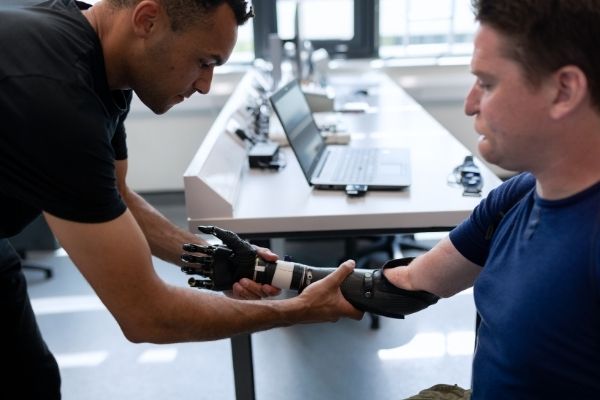
Modern prosthetic limbs cost between $20,000 and $100,000 per device and require replacement every three to five years. Over a working lifetime, prosthetic costs alone can exceed $500,000. An early settlement that does not account for lifetime prosthetic replacement costs is almost always inadequate. The Amputee Coalition provides resources on the long-term costs of living with limb loss.
Lost earning capacity
Most maritime workers who suffer major amputation injuries cannot return to their former occupation. The income differential between maritime work and alternative employment available to an amputee, calculated over the remaining working years, must be established by a vocational expert and an economist. Lambert Zainey works with these experts on every amputation case.
Psychological injuries
PTSD, depression, and anxiety are documented consequences of traumatic amputation and are recognized as compensable damages under maritime law. Many amputation survivors also experience phantom limb pain — a neurological condition causing ongoing pain in the amputated limb — which requires long-term medical management and is compensable as both a medical expense and a component of pain and suffering.
Maintenance and cure
Jones Act seamen are entitled to maintenance and cure benefits from the date of injury regardless of fault. This covers daily living expenses and all reasonable and necessary medical treatment during recovery. For amputation injuries, maintenance and cure obligations can extend for years.
One important distinction: cure covers medical costs up to Maximum Medical Improvement — the point where your condition has stabilized and further treatment will not yield physical improvement. A negligence settlement must separately cover the cost of medical care you will need after reaching MMI, including prosthetic limb replacements for the rest of your life. Workers who settle before understanding this distinction often find their post-MMI costs are not covered.
Get Our FREE Guide to Protect Your Claim
What you do after an accident is critical. Insurance companies will try to get you to make mistakes that can hurt your claim. Our free guide can help you avoid these traps.
Download our complimentary guide: “5 Costly Mistakes to Avoid After Any Maritime Accident” to arm yourself with the knowledge you need to protect your rights.
Your Legal Rights After a Maritime Amputation Injury
If you qualify as a Jones Act seaman:
You can sue your employer directly for negligence under the Jones Act, pursue an unseaworthiness claim if an unsafe vessel condition contributed to the accident, and receive maintenance and cure benefits regardless of fault. Together these three claims provide the most comprehensive recovery available to any maritime worker.
If you work on a fixed offshore platform:
Your claim is governed by OCSLA and the LHWCA, which provide no-fault workers compensation benefits and allow separate negligence claims against platform operators, equipment manufacturers, and contractors.
⚠️ Critical deadline for platform workers: You must notify your employer within 30 days and file a formal LHWCA claim within one year. Missing the 30-day notice permanently eliminates your right to benefits.
If defective equipment caused the amputation:
You may have a product liability claim against the equipment manufacturer in addition to any negligence claims against your employer or platform operator. Product liability claims do not require proving negligence — only that the equipment was defective and caused the harm.
Lambert Zainey’s case results include a significant settlement for a coverstacker whose hand was crushed by a barge cover. See our full case results.
What to Do After a Maritime Amputation Injury
Step 1: Get emergency medical treatment immediately.
Amputation injuries require immediate emergency care. After stabilization, follow up with specialists of your own choosing — including a hand surgeon or orthopedic surgeon experienced in amputation injuries and a prosthetist. Under maritime law, you have the right to choose your own doctor. Do not let your employer direct you exclusively to company-appointed physicians.
⚠️ Beware of company doctors. Maritime employers often pressure injured seamen to treat exclusively with company-appointed physicians or contracted clinics. Company doctors are financially incentivized to minimize injury severity and may prematurely declare that you have reached Maximum Medical Improvement to cut off cure payments. You have the absolute right under maritime law to choose your own independent specialists. Exercise that right.
Step 2: Report the injury in writing.
Report the accident to your employer as soon as possible and ensure a written incident report is filed. For LHWCA/OCSLA workers, the 30-day notice requirement begins running on the date of injury.
Step 3: Do not sign anything before speaking with an attorney.
Do not sign any document, give a recorded statement, or accept any offer before consulting a maritime attorney. Early settlement offers in amputation cases almost never account for the full lifetime cost of prosthetics, rehabilitation, and lost earning capacity.
Step 4: Contact Lambert Zainey.
Amputation injury cases require attorneys who understand maritime law, who work with the right medical and vocational experts, and who refuse to settle until every element of your long-term damages has been fully documented. Contact us for a free, confidential consultation.
Frequently Asked Questions
Injured in a Maritime Amputation Accident? Here Is What to Do Next.
A maritime amputation changes everything. The companies involved have legal teams working to minimize what they pay from the moment the accident is reported. You deserve the same level of representation working on your behalf.
- Nearly 50 years representing workers with catastrophic maritime injuries across the Gulf Coast
- Over $1 billion recovered for injured maritime workers and their families
- Experience with amputation cases including prosthetic cost projection, vocational expert testimony, and lost earning capacity analysis
- No fees unless we recover for you
Contact Lambert Zainey today for a free, confidential consultation — no fees unless we recover for you. Call us at 800-521-1750.