
- Maritime burn injuries — from fires, explosions, chemical exposure, and electrical equipment — are among the most catastrophic injuries a seaman or offshore worker can suffer, often resulting in permanent disfigurement, disability, and long-term medical care.
- When a maritime employer fails to maintain safe equipment, enforce safety protocols, or provide adequate protective gear, injured workers have Jones Act negligence and unseaworthiness claims that go far beyond workers’ compensation.
- The ARCO advantage: Lambert Zainey secured multi-million dollar settlements for workers killed or injured in the 1990 ARCO pipeline explosion — one of the firm’s most significant burn injury case results.
- Severe burn injuries typically require surgery including skin grafts, prolonged rehabilitation, and in many cases permanent lifestyle adjustments. Early settlement offers rarely account for these long-term costs.
- Do not sign anything from your employer or their insurer before speaking with a maritime attorney. In serious burn cases, vessel owners frequently invoke the Limitation of Liability Act to cap what they pay — having experienced legal representation from the beginning is critical.
Fires, explosions, chemical spills, and electrical failures happen on vessels and offshore platforms across the Gulf Coast every year. The U.S. Bureau of Safety and Environmental Enforcement recorded 192 offshore injuries in 2025 — and burns are among the most common and most severe outcomes when those incidents involve fire, heat, or chemical exposure.
When a maritime burn injury results from an employer’s failure to maintain safe equipment, enforce safety protocols, or provide adequate protective gear, that failure is not just a safety violation — it is legal negligence. Lambert Zainey has represented burn injury victims in Gulf Coast maritime cases for nearly 50 years, including multi-million dollar settlements for workers injured in the 1990 ARCO pipeline explosion.
Common causes of maritime burn injuries include:
Each of these causes is tied to employer obligations under maritime law. Maritime employers are required to provide a reasonably safe vessel, maintain fire suppression systems, properly store flammable materials, and train crew members on emergency procedures. When a fire breaks out due to poor maintenance, faulty wiring, fuel leaks, or unsafe practices, injured seamen may be entitled to pursue compensation for the full extent of their losses.

Types of Maritime Burn Injuries
Burn injuries are classified in three broad categories, based on their severity:
|
Burn Type |
What It Affects |
Typical Treatment |
Legal Damages |
|---|---|---|---|
|
First-degree |
Outer skin layer only |
First aid, minor care |
Medical expenses, lost wages |
|
Second-degree |
Skin outer and lower layers |
Medical treatment, possible hospitalization |
Medical expenses, lost wages, pain and suffering |
|
Third-degree |
Full skin thickness, deeper tissues |
Surgery, skin grafts, rehabilitation |
Full damages — future medical costs, lost earning capacity, disfigurement |
|
Chemical burns |
Skin and potentially internal organs if inhaled |
Emergency decontamination, specialist care |
Full damages — discovery rule may apply if latency delays diagnosis |
Chemical burns deserve special attention. They are particularly common on offshore platforms and vessels carrying industrial cargo. Chemical burns can cause severe internal damage if inhaled, and symptoms may not appear immediately — creating documentation challenges that make early attorney involvement critical.
Symptoms of Maritime Burn Injuries
Symptoms of marine burn injuries depend on the type and cause of burn, and can include:
Minor first- and second-degree burns respond well to first aid treatment. They usually resolve themselves with little or no complications. However, the same isn’t true for severe second- or third-degree burns.
Potentially life-threatening complications that can result from third-degree burns include:
Maritime workers with severe burn injuries may require:
Steps Employers Should Take to Prevent Burns
Proper safety training and equipment is essential to preventing maritime burn injuries. Some of the ways maritime employers can help prevent the causes of these injuries include:
What to Do After a Maritime Burn Injury
Step 1: Accept emergency medical treatment immediately.
Burn injuries are medical emergencies. Accept all emergency care and follow up with a burn specialist or plastic surgeon — not just a general practitioner — as soon as possible. Tell every treating physician exactly how the injury occurred, what caused the burn, and what protective equipment was or was not available. A complete medical record from the date of injury is essential evidence.
Step 2: Report the injury in writing.
Report the accident to your employer or vessel officer as soon as you are able. For LHWCA/OCSLA platform workers, the 30-day notice requirement is strict and begins running on the date of injury. Do not delay.
Step 3: Preserve the evidence.
Note what equipment was involved, what safety systems were functioning, and what protective gear was or was not provided. Write down details while your memory is fresh. Evidence of what caused the fire or explosion — maintenance records, inspection logs — can disappear quickly.
Step 4: Do not sign anything before speaking with an attorney.
Employers and their insurers begin working to limit their exposure immediately. In serious burn cases, vessel owners may invoke the Limitation of Liability Act. Do not sign any incident report, medical release, or settlement document before consulting a maritime attorney.
Step 5: Contact Lambert Zainey.
Burn injury claims must account for the full lifetime cost of treatment. Contact us for a free, confidential consultation.
Your Legal Rights After a Maritime Burn Injury
Maritime burn injuries give rise to the same legal framework as any serious maritime injury. Which law applies depends on where you work and your job classification.
If you qualify as a Jones Act seaman:
You can sue your employer directly for negligence under the Jones Act if the burn resulted from their failure to maintain safe equipment, provide adequate training, or enforce safety protocols. You are also entitled to maintenance and cure benefits from the date of injury regardless of fault, including all medical treatment, surgery, and rehabilitation required to reach maximum medical improvement. Deadline: 3 years from the date of injury.
If the vessel or equipment was defective:
A vessel owner has an absolute duty to provide a seaworthy vessel, including functioning fire suppression systems, properly maintained electrical equipment, and adequate protective gear. If a defective condition contributed to the burn, you have an unseaworthiness claim against the vessel owner independent of any negligence claim, even if the owner did not know about the defect.
If you work on a fixed offshore platform:
OCSLA governs your claim, extending LHWCA benefits from your employer and allowing separate negligence claims against platform operators, equipment manufacturers, and contractors.
⚠️ Critical deadline for platform workers: You must notify your employer within 30 days of injury and file a formal LHWCA claim within one year. Missing the 30-day notice permanently eliminates your right to benefits.
What your damages should cover:
The Limitation of Liability Act — What Burn Injury Victims Need to Know
In many serious burn cases, the insurance company for the employer and the vessel owner invoke the Limitation of Liability Act to attempt to avoid paying compensation. By filing a Petition for Limitation of Liability, the vessel owner and employer claim they owe no compensation, arguing they had no knowledge of the condition that caused the fire or explosion.
This is why having an attorney who can immediately retain fire and explosion origin and cause experts is critical. Evidence of what caused the fire — equipment maintenance records, inspection logs, hot work permits — disappears quickly after an incident. Lambert Zainey has handled complex maritime fire and explosion cases, including the 1989 ARCO platform explosion, and understands how to counter Limitation of Liability proceedings.
Get Our FREE Guide to Protect Your Claim
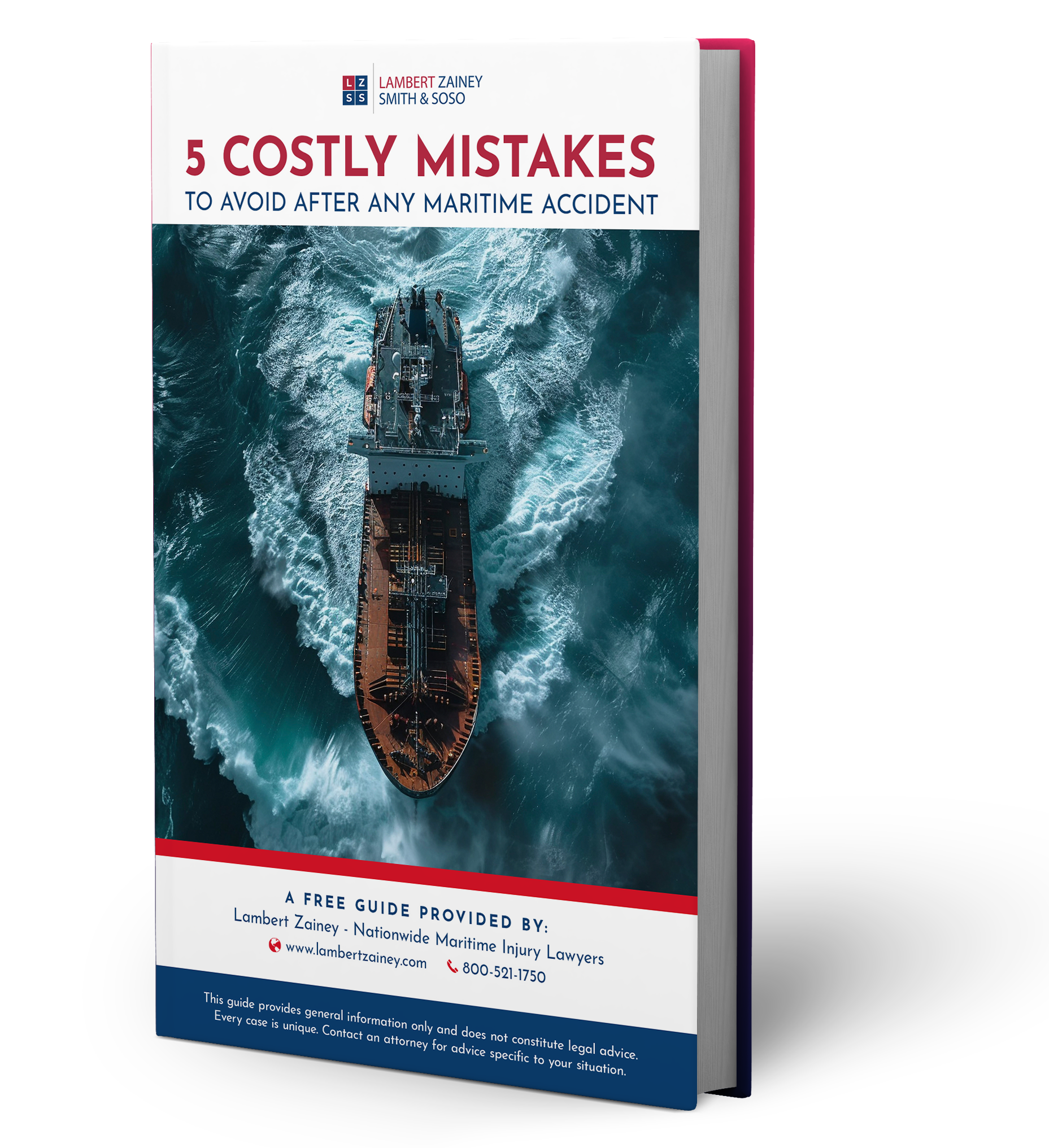
What you do after an accident is critical. Insurance companies will try to get you to make mistakes that can hurt your claim. Our free guide can help you avoid these traps.
Download our complimentary guide: “5 Costly Mistakes to Avoid After Any Maritime Accident” to arm yourself with the knowledge you need to protect your rights.
Burned in a Maritime Accident? Here Is What to Do Next.
When a maritime fire, explosion, or chemical exposure injures a worker, the companies involved have legal teams working immediately. You deserve the same.
Contact Lambert Zainey today for a free, confidential consultation — no fees unless we recover for you. Call us at 800-521-1750.