
- Vessel owners and employers have a legal duty to provide a safe gangway — this responsibility covers proper rigging, maintenance, lighting, and adjustment for tide and weather.
- Seamen injured on a gangway can file claims under both the Jones Act (employer negligence) and the doctrine of Unseaworthiness (unsafe vessel condition) simultaneously.
- Dockworkers and longshoremen covered by the LHWCA can file a claim against the vessel owner — separate from their employer — under the Scindia Doctrine.
- Injured workers are entitled to Maintenance and Cure benefits regardless of fault while also pursuing full compensation through a Jones Act or unseaworthiness claim.
- Evidence disappears fast after a gangway accident — video gets recorded over, steps get repaired, rigging gets re-done. Contact an attorney before the company has a chance to clean up.
The Most Dangerous Step on the Water
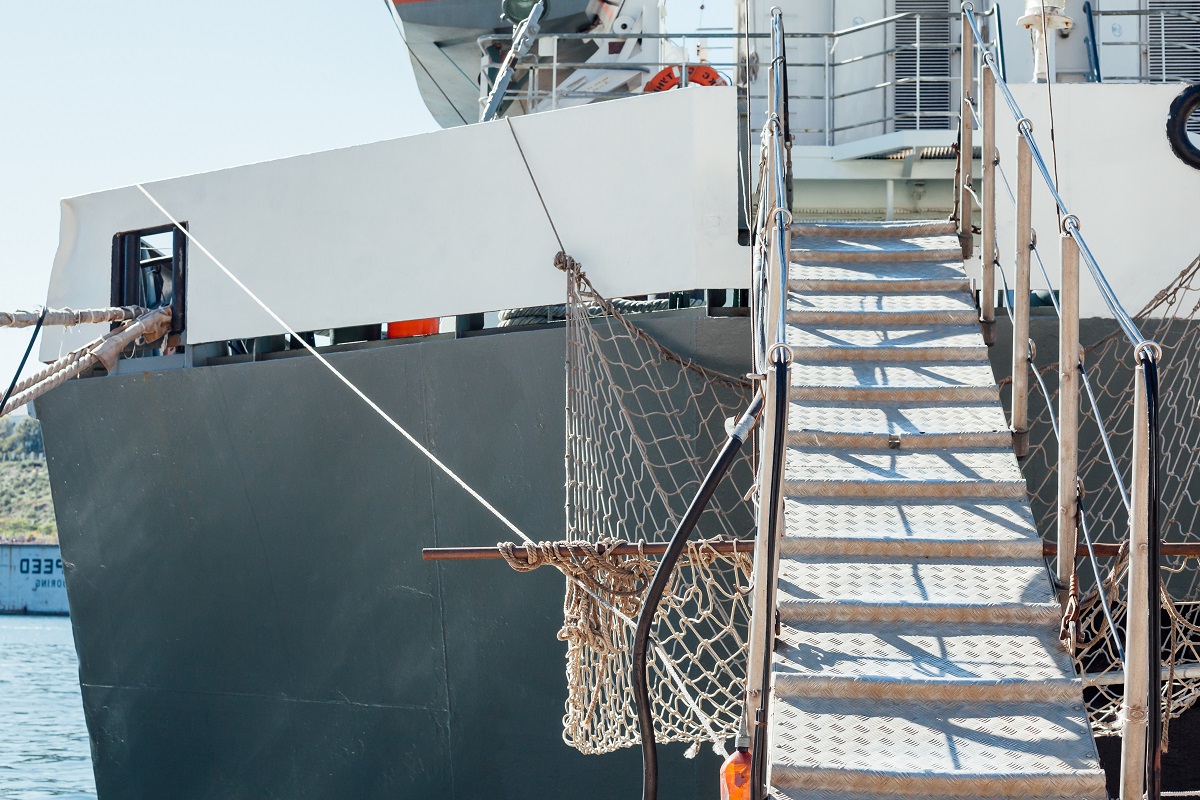
The gangway is the bridge between land and sea, between the dock and the vessel. It is a critical structure for maritime workers, longshoremen and seamen, as it is used dozens of times every day. When a gangway or brow is poorly maintained, improperly rigged, or unsecured, it can become extremely dangerous.
A gangway accident can result in devastating injuries, including broken bones, head trauma, and even death. Many workers hesitate to report or file a claim, thinking the risk is inherent. However, maritime law places a very high responsibility on the vessel owner and employer to ensure a safe means of ingress and egress (entering and leaving) the vessel.
If you have suffered a gangway injury, the specialized legal team at Lambert Zainey has the expertise to determine liability and fight for the maximum compensation you deserve under the Jones Act, the LHWCA, or general maritime law.
The Vessel Owner’s Core Legal Duty
For any maritime worker, the law mandates that the vessel owner or employer must provide a safe and secure way to board and disembark a ship. This is one of the oldest and most serious responsibilities in maritime law.
This duty is not optional and it is not limited to obvious hazards. If a gangway is unsafe — whether because of a broken step, a missing handrail, poor lighting, or failure to adjust for the tide — the vessel owner can be held responsible for any injury that results, even if they claim they did not know about the problem.
The Duty of “Safe Means of Ingress and Egress”
This legal concept means the crew is required to:
- Properly Rig the Gangway: It must be secured to the vessel and the dock, with safety nets properly positioned underneath.
- Maintain the Gangway: Ropes, railings, steps and non-skid surfaces must be kept in good working order. Worn-out, broken or rusted gangways are a breach of this duty.
- Monitor and Adjust: The gangway must be constantly monitored and adjusted to account for changes in tide, weather and the loading/unloading of cargo, which affects the vessel’s trim (how it sits front to back) and list (how it tilts side to side).
A failure in any one of these duties is strong evidence of negligence.
Proving Liability: Which Maritime Law Applies?
The type of claim you file — and the compensation you can win — depends on your job classification. The common thread is proving that the gangway accident was caused by negligence.
The Seaman’s Claim: Jones Act and Unseaworthiness
If you are a seaman who was injured on the gangway while entering or leaving your vessel, the Jones Act and the doctrine of Unseaworthiness apply.
- Employer Negligence (Jones Act): Your claim is against your employer for failing to exercise reasonable care. This could be a supervisor ordering a hazardous crossing, or a crew member failing to secure the safety lines. The burden of proof is low — we only need to show the employer’s negligence played even a small part in the injury.
- Unseaworthiness: This is the most powerful tool for a gangway injury lawyer. If the gangway itself was structurally unsound (broken step, rusted handrail), was missing proper non-skid padding, or was improperly equipped (no safety net), the vessel is considered unseaworthy. The owner is responsible for any injury caused by that unsafe condition — even if they did not know the gangway was unsafe and even if no one was careless. The unsafe condition itself is enough.
The Dockworker’s Claim: LHWCA and Vessel Owner Negligence
If you are a longshoreman, harbor worker, or shipyard employee covered by the LHWCA, your claim is typically against the vessel owner (not your direct employer) for their negligence.
Your claim is governed by the Scindia Doctrine, which has three main duties the vessel owner owes to the longshore worker:
- The Turnover Duty — add after the existing explanation: In plain terms: if the gangway was already broken or unsafe when the longshoremen started work, and the vessel’s crew knew or should have known about it, the vessel owner is responsible.
- The Active Control Duty — add after the existing explanation: In plain terms: if the vessel’s crew is actively directing or supervising the work being done, they have to make sure the work area — including the gangway — is kept safe while they are in charge.
- The Intervention Duty — add after the existing explanation: In plain terms: if the vessel’s crew sees a dangerous condition that the longshoreman cannot reasonably avoid or fix on their own, they cannot simply watch it happen. They have to step in.
Top Causes of Unsafe Gangway Accidents
A successful gangway injury case requires proving the specific breach of duty. These are the most frequent, yet preventable, hazards we investigate:
- Improper Rigging and Securing:
- The gangway is not securely lashed to the vessel or the dock.
- Failure to use tag lines, resulting in the gangway swinging out of control.
- Improper angle of ascent/descent, making the cross too steep or shallow.
- Failure to Adjust:
- Ignoring tide or water level changes, leaving the gangway suspended in mid-air or pressed too hard against the dock.
- Failure to adjust for cargo operations that cause the vessel to list (tilt) or trim (sink).
- Maintenance and Deterioration:
- Worn-out or broken handrails, ropes or chains.
- Steps or walking surfaces that are bent, cracked, or corroded.
- Non-skid material that is worn off or covered in ice, oil or grease.
- Environmental Factors:
- Failure to adequately light the gangway at night.
- Failure to remove ice, snow or excessive moisture.
Crucial Evidence: What a Gangway Injury Lawyer Preserves
In every gangway accident case, the most valuable evidence is the fastest to disappear. The company can easily repair a broken step, re-rig the lines, or simply record over video footage. Our first step is to issue a formal evidence preservation demand.
The critical documents and evidence we immediately secure include:
- Official Logbook Entries: These entries document the weather conditions, water levels, and, crucially, the details of the gangway rigging at the time of the accident.
- Accident Report Forms: The company’s internal reports can often contain admissions or documentation of the hazard by the supervisor or captain.
- Vessel Inspection Records: Logs documenting maintenance and repair schedules often show that the broken railing or worn surface was a known issue that was ignored.
- CCTV/Video Footage: Many vessels have cameras pointed at the gangway area. This video is often the clearest proof of the vessel’s movement, the state of the rigging, and the exact cause of the fall.
- Witness Statements: Sworn statements from crew members or longshoremen who saw the fall or who knew the gangway was unsafe.
Your No-Fault Right: Maintenance and Cure (For Seamen)
If you are a seaman who suffered a gangway injury, you are automatically entitled to Maintenance and Cure, regardless of who was at fault for the accident. If your employer has cut off or reduced your Maintenance and Cure payments, learn what steps to take immediately.
- Maintenance: A daily payment to cover your basic living expenses while you are recovering at home.
- Cure: Payment for all reasonable and necessary medical expenses until you reach Maximum Medical Improvement (MMI).
It is essential to understand that Maintenance and Cure is a benefit, but it is not compensation for the injury itself. You must file a Jones Act or Unseaworthiness claim to recover for pain, suffering, and future lost wages. The two types of claims work together, and a specialized gangway injury lawyer pursues both simultaneously.
Damages: Comprehensive Compensation for Your Gangway Injury
A severe gangway accident can lead to devastating long-term consequences, including joint trauma, back and neck injuries, and traumatic brain injuries (TBI). Our goal is to recover comprehensive damages that cover all your past, present and future losses.
Under the Jones Act and general maritime law, the compensation we pursue includes:
- Past and Future Medical Costs: All necessary treatment, including physical therapy, surgery, rehabilitation, and any long-term care required after MMI is reached.
- Loss of Earning Capacity: Compensation for the total amount of wages and benefits you will lose over your lifetime if your injury prevents you from returning to your high-paying maritime or offshore job.
- Pain and Suffering: Compensation for the physical agony, emotional distress, inconvenience, and reduced quality of life caused by your injury.
- Punitive Damages: In rare but serious cases where the employer willfully failed to pay Maintenance and Cure or acted recklessly, punitive damages may be available.
For offshore workers, this calculation often accounts for the high wages and hitch-based pay structures common in Gulf Coast maritime work — see how our offshore injury lawyers handle these claims.
Immediate Steps to Protect Your Gangway Claim
If you or a colleague have suffered a gangway injury, follow these critical steps:
- Do Not Move: Unless you are in immediate danger, wait for help to arrive. Do not allow your employer to rush you into making a statement or signing documents.
- Report Immediately: Verbally report the injury to your supervisor or the captain and insist on filling out an official accident report. Write down the name of the person who took the report.
- Document the Scene: If you can, take photos or video of the unsecured rigging, broken step, or any other hazard that caused your fall. If you cannot do it, ask a trusted coworker to do it for you.
- Do Not Accept a Quick Settlement: The company’s insurer will likely contact you quickly with a low offer. Their offer is a fraction of what your claim is truly worth.
- Contact a Maritime Lawyer: The three-year Statute of Limitations is running, and the evidence is disappearing. Contact a maritime lawyer experienced in gangway accidents immediately.
Frequently Asked Questions
Get the Representation Your Gangway Claim Needs
A gangway injury is a severe consequence of an employer’s negligence. The vessel owner, the company, and their high-powered lawyers will immediately work to shift the blame to you or claim the hazard was your responsibility.
At Lambert Zainey, we have spent decades protecting the rights of seamen and longshoremen. We know the laws, we know the ships, and we know how to secure the evidence required to prove that your gangway accident was not your fault.
Don’t risk your health, career, or family’s financial future. Contact our nationally recognized maritime injury lawyers for a free, confidential case evaluation today.
Get Our FREE Guide to Protect Your Claim
What you do after an accident is critical. Insurance companies will try to get you to make mistakes that can hurt your claim. Our free guide can help you avoid these traps.
Download our complimentary guide: “5 Costly Mistakes to Avoid After Any Maritime Accident” to arm yourself with the knowledge you need to protect your rights.