

When the Company Doctor Says You’re “Fine” But You’re Not

You know something is seriously wrong.
Your back still sends shooting pain down your leg. Your shoulder won’t lift above your head. You’re having headaches, trouble remembering things, or numbness in your hands. But the company doctor spent five minutes with you, ordered an X-ray, and says you’re “fine” — cleared to return to full duty.
This happens every single day in maritime injury cases.
Company-selected physicians often minimize injuries, rush workers through treatment, and push for early return-to-work even when serious damage remains. It’s not always because they’re bad doctors — it’s because their relationship with your employer creates pressure to keep costs down and get you back on the job.
You have the right to fight back with objective medical evidence.
Specialized diagnostic tests — MRIs, CT scans, nerve studies, brain injury assessments — provide proof that can’t be argued with or downplayed. These tests document the true extent of your injuries and prove what you already know: you’re hurt, it’s serious, and your life has been permanently changed.
This guide explains the medical tests that win maritime injury cases, your legal right to independent medical evaluations, and what to do when the company doctor isn’t telling you the truth.At Lambert Zainey, we’ve spent over 40 years fighting for injured maritime workers. We know how to get you the testing you need, find doctors who tell the truth, and use medical evidence to maximize your Jones Act or LHWCA compensation.
Red Flags: Signs You Need an Independent Medical Evaluation
If you’re experiencing any of these warning signs, you need a second opinion from an independent physician immediately:
If any of this sounds familiar, don’t wait. Once you’re declared “healed” or at maximum medical improvement (MMI), your right to additional medical treatment can be cut off. You need independent testing NOW — before it’s too late.
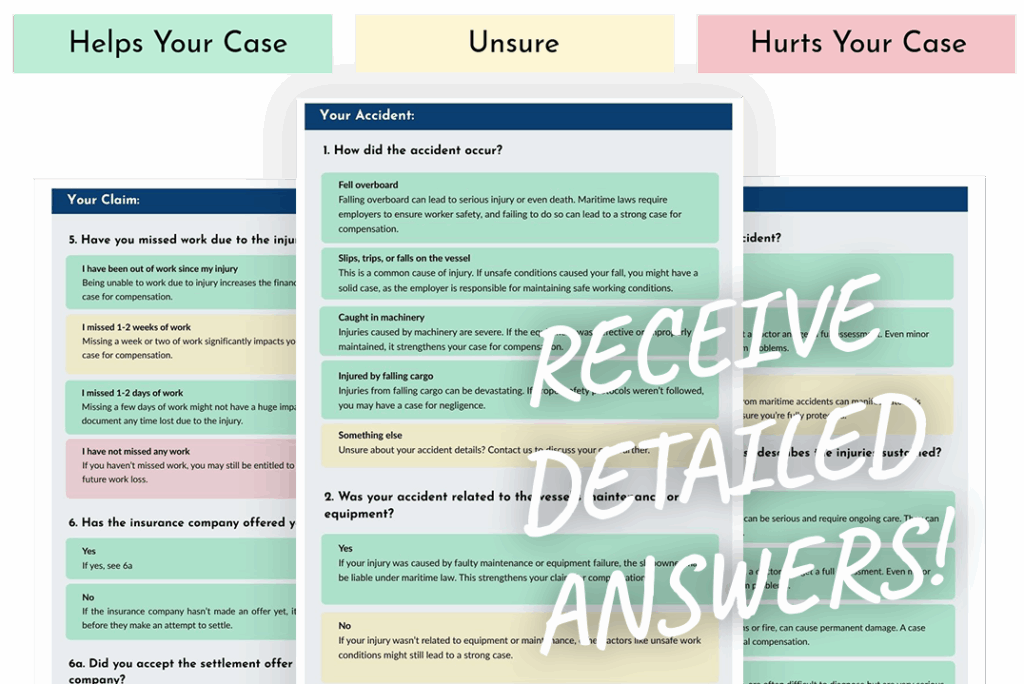
Do I Have A Case? Quiz
Do you want to know if the details of your Maritime Accident HELP or HURT your case?
Take our short quiz to find out.
Understanding Your Medical Rights Under Maritime Law
Before we explain the specific tests, you need to understand your legal rights:
Your Right to Choose Your Own Doctor (Jones Act Seamen)
Under the Jones Act, you have the absolute right to see a doctor of your choice. Your employer cannot force you to see only their selected physician. You can:
✓ Choose your own doctor for treatment
✓ Get a second opinion from any specialist you want
✓ Request specific medical tests your doctor recommends
✓ Refuse to see company-selected doctors who have a history of minimizing injuries
Your Right to Maintenance and Cure
Maintenance and Cure is your employer’s no-fault obligation to pay for your medical treatment. This means:
✓ The employer must pay for all reasonable and necessary medical care until you reach maximum medical improvement (MMI)
✓ This includes diagnostic tests like MRIs, CT scans, specialist consultations, and therapy
✓ You don’t have to prove the employer was negligent to receive these benefits
✓ Maintenance and Cure covers your medical expenses and basic living expenses during recovery
Important limitation: Maintenance and Cure does NOT compensate you for pain and suffering, permanent disability, or lost future earnings. Those damages require a separate Jones Act negligence claim or LHWCA claim.
LHWCA Workers’ Rights
If you’re a longshore worker, harbor worker, or other LHWCA-covered employee:
✓ You receive medical benefits and partial wage replacement through the LHWCA system
✓ You have the right to request a change of physician if you’re unhappy with your treatment
✓ You can request a second opinion or additional testing
✓ You may also have the right to sue third parties (vessel owners, contractors, equipment manufacturers) whose negligence caused your injury
The bottom line: You are NOT stuck with whatever the company doctor says. You have legal rights to independent medical care and objective testing.
The Medical Tests That Prove Your Maritime Injury
Here are the diagnostic tests most commonly used to document maritime injuries and prove the full extent of your harm:
1. MRI (Magnetic Resonance Imaging) – The Gold Standard for Soft Tissue Injuries
What it is:
An MRI uses powerful magnets and radio waves to create detailed images of your body’s soft tissues — things that don’t show up on X-rays.
What it shows:
Why it’s critical for your case:
Company doctors love to diagnose “sprains” or “strains” that sound temporary and minor. An MRI proves these aren’t minor soft tissue injuries; they’re permanent structural damage that may require surgery and prevent you from ever doing heavy maritime labor again.
Common maritime injuries diagnosed with MRI:
Legal impact:
When your MRI shows a herniated disc requiring surgery, the value of your case increases dramatically. What the company called a “$10,000 sprain” becomes a $500,000+ permanent injury claim.
2. CT Scan (Computed Tomography) – Emergency Trauma Documentation
What it is:
A CT scan uses X-rays taken from multiple angles and combines them with computer processing to create detailed, 3-D cross-sectional images of your bones and organs.
What it shows:
Why it’s critical for your case:
CT scans are typically ordered in emergency situations immediately after catastrophic accidents such as explosions, falls from height, being struck by heavy objects, or crushing injuries. These scans create a permanent medical record of the severity of your trauma at the moment it happened, before the company can claim your injuries aren’t that serious.
Common maritime injuries diagnosed with CT:
Legal impact:
CT scans documenting internal injuries or complex fractures are powerful evidence in OSHA Fatal Four negligence cases, proving the employer’s safety violations caused catastrophic harm.
3. X-Rays – The Starting Point
What it is:
X-rays use electromagnetic radiation to create images of dense tissues, primarily bones.
What it shows:
Why it matters:
While X-rays don’t show soft tissue damage (muscles, ligaments, discs, nerves), they’re typically the first diagnostic test ordered after an injury. When your X-ray shows a fracture or dislocation, it creates immediate documented proof of injury. When your X-ray is “normal” but you’re still in severe pain, it tells you that you need more advanced imaging like an MRI or CT scan.
Common use in maritime cases:
Initial emergency room visit documentation, hand and finger injuries (common in line handling and machinery work), rib fractures from falls or being struck.
Legal impact:
X-rays establish the baseline of your injury on Day 1. When the company later claims your injuries are “pre-existing” or happened somewhere else, your initial X-rays prove the injury occurred on their watch.
4. EMG and Nerve Conduction Studies (NCV) – Proving Permanent Nerve Damage
What it is:
Electromyography (EMG) and Nerve Conduction Velocity (NCV) tests measure the electrical activity in your muscles and the speed of signals traveling through your nerves.
What it shows:
Why it’s critical for your case:
If you’re experiencing numbness, tingling, weakness, or burning sensations in your arms, hands, legs, or feet after an accident, nerve testing provides objective proof that you have permanent nerve damage. This isn’t something that can be dismissed as you “faking it” or “exaggerating.”
Common maritime injuries requiring nerve testing:
Legal impact:
Permanent nerve damage often means you can no longer perform the heavy physical labor, climbing, lifting, and manual dexterity required in maritime work. EMG/NCV results proving nerve damage support large claims for loss of future earning capacity — compensation for the income you’ll never earn again because you can’t return to your maritime career.
5. Neuropsychological Testing – Documenting “Invisible” Brain Injuries
What it is:
Neuropsychological testing involves hours of detailed cognitive assessments administered by specialized psychologists. These tests measure memory, attention, processing speed, problem-solving, verbal skills, and emotional functioning.
What it shows:
Why it’s critical for your case:
Following falls, struck-by accidents, explosions, or any blow to the head, you may suffer a Traumatic Brain Injury. Mild to moderate TBIs often don’t show up on CT scans or MRIs, but they cause real, disabling symptoms: headaches, memory loss, difficulty concentrating, mood swings, sensitivity to light and noise, trouble sleeping, and personality changes.
Company doctors love to dismiss these as “just a concussion” or “post-concussion syndrome that will resolve.” Neuropsychological testing provides objective, measurable proof that your brain has been permanently damaged.
Common symptoms that indicate you need neuropsych testing:
Legal impact:
Documented cognitive impairment means you may never be able to return to work that requires quick decision-making, attention to safety hazards, operating equipment, or following complex procedures. This supports substantial claims for permanent disability and loss of earning capacity.
6. Functional Capacity Evaluation (FCE) – Proving You Can’t Do Maritime Work Anymore
What it is:
A Functional Capacity Evaluation is a comprehensive physical assessment (usually 4-8 hours over 1-2 days) that measures your actual physical abilities after injury.
What it tests:
Why it’s critical for your case:
Maritime work requires heavy physical labor: lifting 50-100+ pounds, climbing ladders and stairs, working in awkward positions, repetitive overhead reaching, sustained physical activity for 12+ hour shifts. An FCE provides objective, measurable proof that you can no longer perform these essential job functions.
What FCE results show:
Legal impact:
When an FCE proves you can only lift 20 pounds occasionally but your maritime job required lifting 100 pounds frequently, you have objective proof you can never return to your career. This supports maximum compensation for loss of earning capacity — the difference between what you would have earned over your lifetime in maritime work versus what you can now earn in sedentary, lower-paying work.
7. Diagnostic Injections – Pinpointing the Exact Pain Source
What it is:
Diagnostic injections (epidural steroid injections, facet joint blocks, nerve root blocks) serve both as treatment and as diagnostic tools. A physician injects medication (usually a numbing agent and steroid) into a specific structure in your spine.
What it proves:
If the injection temporarily relieves your pain, it proves that specific structure (disc, nerve, facet joint) is the source of your injury. When imaging studies are unclear or show multiple possible injury sources, diagnostic injections pinpoint exactly what’s causing your pain.
Why it matters for your case:
Company doctors often claim your pain is “non-specific” or “can’t be localized” when they want to deny surgery or claim you’re exaggerating. When a diagnostic injection into your L5-S1 disc completely eliminates your leg pain for 6 hours, it proves that disc is herniated and causing nerve compression, supporting your claim that you need surgery.
Legal impact:
Diagnostic injections that provide temporary relief are often the “missing link” that proves you need surgery, even when the company doctor claims surgery isn’t necessary.
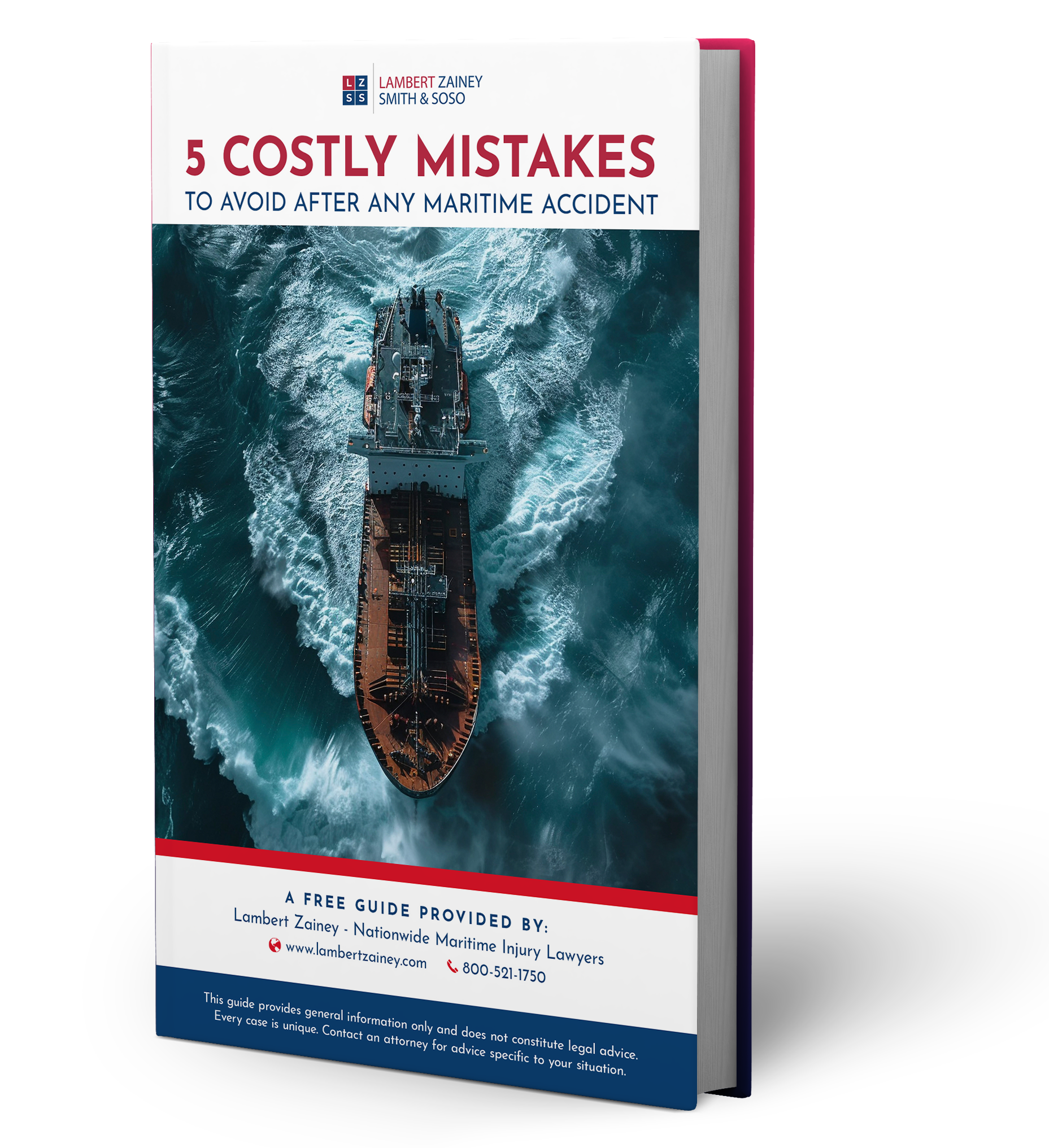
Get Our FREE Guide to Protect Your Claim
What you do after an accident is critical. Insurance companies will try to get you to make mistakes that can hurt your claim. Our free guide can help you avoid these traps.
Download our complimentary guide: “5 Costly Mistakes to Avoid After Any Maritime Accident” to arm yourself with the knowledge you need to protect your rights.
Maritime Injury Medical Tests: What They Prove and Why They Matter
|
Test Type |
What It Shows |
Common Maritime Injuries Diagnosed |
Why Critical for Your Claim |
|---|---|---|---|
|
MRI (Magnetic Resonance Imaging) |
Soft tissue: discs, ligaments, tendons, cartilage, nerves |
Herniated discs, rotator cuff tears, ACL/MCL tears, meniscus tears, spinal cord damage |
Proves “sprain” is actually permanent structural damage requiring surgery; dramatically increases case value |
|
CT Scan (Computed Tomography) |
Bones, internal organs, internal bleeding, 3-D trauma imaging |
Complex fractures, organ damage, internal bleeding, skull fractures |
Critical emergency documentation; proves severity in “struck-by” and “caught-in/between” OSHA Fatal Four cases |
|
X-Ray |
Bones, joint alignment, fractures, dislocations |
Broken bones, dislocations, arthritis, foreign objects |
First-line diagnostic; creates Day 1 injury documentation; starting point for advanced imaging |
|
EMG/NCV (Nerve Testing) |
Nerve damage, function, and signal speed |
Carpal tunnel, radiculopathy, peripheral nerve injuries, pinched nerves |
Objective proof of permanent nerve damage; supports inability to perform physical maritime labor |
|
Neuropsychological Testing |
Cognitive function, memory, processing speed, emotional changes |
Traumatic Brain Injury (TBI), concussion, cognitive impairment, personality changes |
Documents “invisible” brain injuries that don’t show on scans; proves cognitive disability prevents return to work |
|
Functional Capacity Evaluation (FCE) |
Physical work abilities: lifting, carrying, climbing, endurance |
Physical limitations from any injury type |
Objective proof you cannot return to maritime work; supports loss of earning capacity claims for career-ending injuries |
|
Diagnostic Injections |
Pinpoint exact pain source in spine |
Disc herniations, facet joint injuries, nerve impingement, radiculopathy |
When imaging is unclear, proves exact injury location; supports medical necessity of surgery |
Frequently Asked Questions: Medical Testing for Maritime Injuries
We Fight to Get You the Medical Truth — And the Compensation You Deserve
Company doctors may say you’re “fine.” Insurance adjusters may claim your injuries are “minor” or “pre-existing.” But specialized medical testing tells the truth your body already knows: you’re hurt, it’s serious, and your life has been permanently changed.
MRIs prove herniated discs. CT scans document internal trauma. Nerve testing shows permanent damage. Brain injury assessments reveal cognitive disability. Functional capacity evaluations prove you can never do maritime work again.
This objective medical evidence is what wins substantial Jones Act and LHWCA settlements.
At Lambert Zainey, we’ve spent over 40 years fighting for injured maritime workers across Louisiana and the Gulf Coast. We know:
You deserve medical care that focuses on your recovery, not the company’s bottom line.
Call Lambert Zainey today for a free, confidential case review: 800-521-1750
We’ll review your medical records, explain what additional testing you need, connect you with qualified specialists, and fight to get you the compensation your injuries deserve.
Don’t let the company doctor decide your future. Let the medical evidence speak for itself.