
Do I Have a Maritime Injury Case? Key Factors to Consider
Getting hurt on the job out on the water is serious. You’re dealing with pain, medical bills, and lost pay, all while trying to figure out the complicated rules of maritime law. One of the biggest questions on your mind is probably: “Do I even have a case?”
It’s a fair question, and the answer often depends on a few key details about your job, where the accident happened, and who might have been at fault. Maritime law is very different from laws covering land-based injuries.
To help you get a clearer picture, we’ve put together this guide outlining the main factors that determine if you have a strong maritime injury claim. And to make it even easier, you can take our free, confidential quiz right here on this page.
Do you want to know if the details of your Maritime Accident help or hurt your case? Take our short quiz to find out.
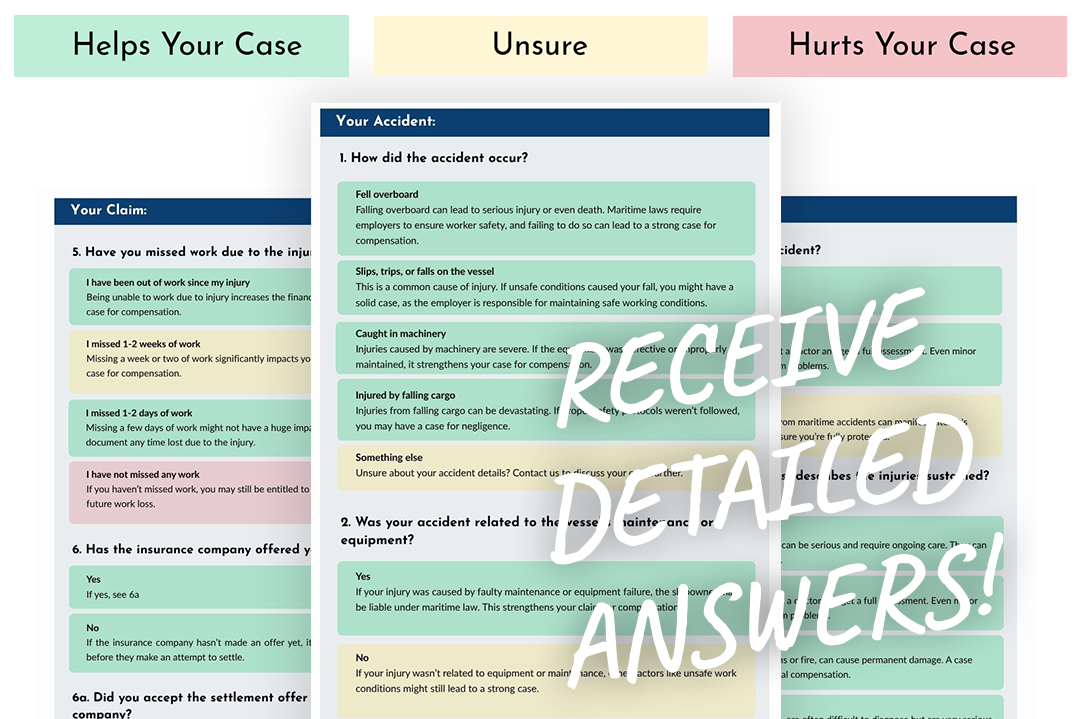
Answer questions about 3 critical areas:
- Your Accident
- Your Injuries
- Your Claim
Take Our Quiz
Factor 1: What Was Your Job Title? (Seaman vs. Harbor Worker)
Your job is often the first factor in figuring out which laws protect you.
Are You a “Seaman” (Jones Act)?
Generally, if you are part of the regular crew on a vessel (like a tugboat, supply boat, barge, drillship, or even some offshore rigs when they’re moving), you likely qualify as a seaman. If your injury happened because your employer or a coworker was careless (negligent), you are probably protected by the Jones Act. This law allows you to sue your employer for damages like medical bills, lost wages, and even pain and suffering.
➡️ Learn More: Who Qualifies as a Seaman?
Are You a Harbor Worker (LHWCA)?
f your job involves working on the docks, piers, shipyards, or fixed offshore platforms and you’re injured there, you’re likely covered by the Longshore and Harbor Workers’ Compensation Act (LHWCA). This is a federal workers’ compensation system that provides benefits for medical care and lost wages, usually without needing to prove fault.
➡️ Discover Your LHWCA Rights Here.
Factor 2: Where Did the Accident Happen? (Vessel vs. Fixed Location)
The location of your injury is also a critical factor:
- On a Vessel: If your injury happened while you were aboard a moving vessel, or part of its crew, maritime laws like the Jones Act and Unseaworthiness usually apply. This means you have strong rights against the vessel owner and your employer if carelessness or an unsafe condition caused your injury. Understand Vessel vs. Platform differences on our Jones Act Page or Unseaworthiness Claims Page.
- On a Fixed Location: If your injury occurred on a fixed platform attached to the seabed, or on a dock, pier, or in a shipyard, the rules often change. The Outer Continental Shelf Lands Act (OCSLA) usually applies to fixed platforms, directing courts to use Louisiana state law (or the nearest state’s law) for negligence claims and automatically granting LHWCA benefits from your employer. Learn more about injuries on fixed platforms under OCSLA.
Factor 3: Was Someone Careless? (Proving Fault)
Ready to See How Your Answers Add Up? Take Our Free Quiz!
Understanding these factors is the first step, but applying them to your specific situation can be complicated. That’s where our “Do I Have a Maritime Case?” Quiz comes in.
In just a few minutes, you can answer questions about your job, where you were injured, and what happened. Based on your responses, you’ll get an idea of the legal protections that might apply to you – and what steps you can take next.It’s completely free, fast, and confidential.
Still Have Questions? Let’s Talk.
This guide and quiz are meant to give you a general understanding. Every maritime injury case is different, and the details matter.
If you’ve been injured and want to know exactly how the law applies to your situation, or if you’ve already been contacted by an insurance company, it’s important to get experienced legal advice.
Lambert Zainey’s maritime lawyers are here to help. We offer a free, no-obligation consultation to review your accident, discuss your potential claim, and answer all your questions.
Call Us 24/7: 800-521-1750
Or Fill Out Our Secure Online Contact Form
NATIONALLY RECOGNIZED ATTORNEYS




CONTACT US
Our experienced attorneys are here to guide you through every step of the process, from initial consultation to settlement or trial.
Free Case Review
Fill out the form below to contact Lambert Zainey and schedule a free, confidential consultation and discuss your case with an experienced attorney.