
- Your employer is legally required to continue Maintenance and Cure benefits until you have genuinely reached Maximum Medical Improvement (MMI)—not just when they decide they are done paying.
- A company doctor’s MMI determination is not automatically binding. If your own independent physician disagrees, you have strong legal grounds to dispute the termination.
- Employers who cut off benefits without a legitimate medical basis can be sued for the unpaid benefits, consequential damages, and your attorney’s fees.
- If the denial is found to be willful, arbitrary, or made in bad faith, a federal court may award massive punitive damages to punish the employer.
- Acting quickly matters. The medical and financial evidence you gather immediately after your checks stop is critical to the strength of your lawsuit.
If your employer has suddenly stopped paying your Maintenance and Cure benefits, but you believe your physical recovery is not complete, you are facing one of the most common—and most damaging—tactics used against injured maritime workers.
Maintenance and Cure is not a discretionary bonus. It is a strict legal obligation your employer has under general maritime law. It does not end until a qualified physician determines you have reached Maximum Medical Improvement (MMI).
When an employer terminates those benefits prematurely—whether by relying on a company doctor’s rushed evaluation, disputing that your injury happened on the job, or simply stopping payment without explanation—they are violating your rights under federal maritime law.
This guide explains exactly what your employer is (and is not) allowed to do, what “arbitrary and capricious” denial means in a courtroom, the exact steps you must take immediately after your benefits are cut off, and the severe legal penalties your employer faces for acting in bad faith.
How Does Maintenance & Cure Work?
Before you can fight a termination, you must understand exactly what is being taken from you.
If a seaman qualifies for these benefits, the employer is legally obligated to pay them until the seaman reaches Maximum Medical Improvement (MMI).
MMI is the specific point at which a seaman’s condition cannot be improved any further with medical treatment. MMI does not mean the seaman is fully recovered, pain-free, or fit to return to work. A seaman can reach MMI while still being permanently disabled and requiring palliative medical care for the rest of their life.
Maintenance and Cure is completely separate from a Jones Act negligence claim. Receiving M&C does not stop you from filing a lawsuit for your lost future wages and pain and suffering.

The Dispute: I Haven’t Reached MMI, but the Company’s Doctor Says I Have
An employer has a right to require an injured seaman to be evaluated by a company-selected doctor to determine if they have reached MMI.
But what happens when the company doctor states you have achieved MMI, but your personal, treating physician strongly disagrees?
This “company doctor problem” happens constantly. It arises in catastrophic cases (paralysis, TBI, severe spinal cord damage) where an employer wants to cap their massive medical liabilities quickly. It also happens in cases involving back, shoulder, and knee injuries where the seaman’s recovery is genuine, but slower than the employer’s insurance company would prefer.
In these situations, the company doctor may declare MMI after a 10-minute exam, without ordering an MRI, simply because the employer is pushing for it.
Maritime law gives you a specific protection here.
When a company doctor and your treating physician reach conflicting conclusions about MMI, courts do not automatically defer to the company doctor. Judges look at both doctors’ qualifications, how thorough their exams were, what diagnostic tests they used, and whether their findings match your full medical history.
In cases of genuine medical dispute, federal admiralty courts have historically resolved the ambiguity in favor of the injured seaman. MMI is a medical determination, not a corporate one. You have the absolute right to see a doctor of your own choosing for an independent, objective opinion.
Is the Company Doctor Downplaying Your Injury?
If your benefits were cut off, you might have a larger case than you realize.
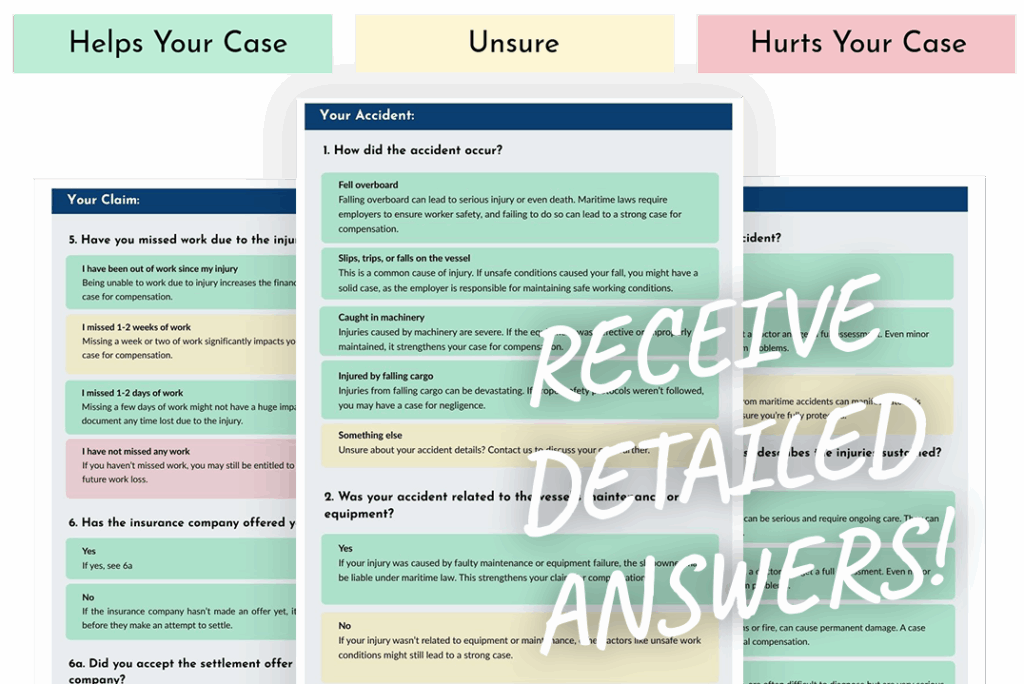
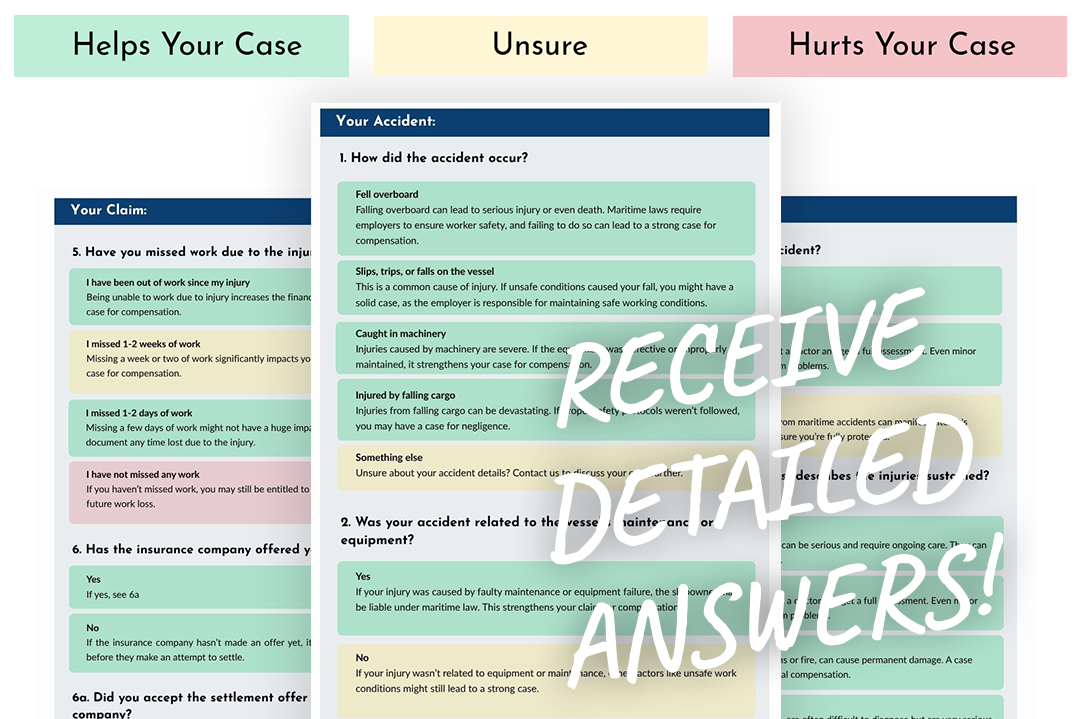
Do you want to know if the details of your Maritime Accident HELP or HURT your case? Take our free, 60-Second Maritime Case Quiz to find out where you stand.
What Does It Mean When an Employer ‘Arbitrarily’ Denies Maintenance and Cure?
You may have heard that employers who deny Maintenance and Cure “arbitrarily and capriciously” face severe additional legal consequences. But what does that actually mean in a courtroom?
When maritime courts evaluate a denial, they ask a straightforward question: Did the employer have a legitimate, reasonable medical or factual basis for their decision to stop paying, or did they cut off benefits out of convenience, cost-cutting, or bad faith?
You do not need to prove your employer was maliciously evil to meet this standard. You simply need to show they acted without a reasonable basis. Common examples of arbitrary and capricious denial include:
If your employer has cut off your Maintenance and Cure benefits and you intend to fight back, your immediate actions will determine the strength of your lawsuit.
4 Steps to Take When You Dispute a Benefit Termination
What Can You Recover When Your Employer Wrongfully Terminates Your M&C?
When an employer wrongfully terminates, delays, or denies Maintenance and Cure benefits, maritime law provides several distinct categories of financial recovery to punish the employer and make the seaman whole.
For a deeper understanding of when punitive damages apply and what you need to prove, see our full post on punitive damages in maintenance and cure claims.
Fight Back Against Bad Faith Denials
The maritime trial attorneys at Lambert Zainey have spent more than 40 years representing injured seamen whose employers have tried to cut corners on Maintenance and Cure. We know exactly how these disputes work, what medical evidence matters, and how to hold corporate employers financially accountable when they act in bad faith.
If your benefits have been reduced, delayed, or terminated, and you believe your physical recovery is not complete, do not let the company doctor dictate your future.
Contact us today for a free, confidential consultation. We represent maritime workers across the Gulf Coast and throughout the United States, and we never charge a fee unless we win your case.